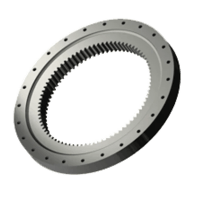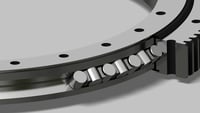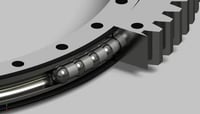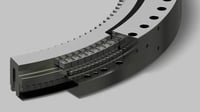

SlewPro slewing ring
Manufacturing Blog

SlewPro Blog


Richard Potesta

Recent Posts

Fourteen Years of Serving the Underserved: The SlewPro Story

Posted by Richard Potesta on Mon, Feb 2, 2026 @ 14:02 PM

When SlewPro was founded nearly fourteen years ago, it wasn’t built to compete head-to-head with the largest slewing ring bearing manufacturers in the world. It was built because working with them—especially as a small or mid-sized OEM—was often frustrating, slow, and impersonal.

Read More

Reducing Engineering Time: How Shared Models and Interface Data Speed Up OEM Design Cycles

Posted by Richard Potesta on Tue, Jan 27, 2026 @ 10:01 AM

Time-to-market determines competitive success in equipment manufacturing. Companies that bring innovative products to market faster capture market share, establish category leadership, and generate revenue while competitors remain in development. Yet engineering teams consistently cite component integration and interface coordination as major bottlenecks consuming weeks or months of development time without adding functional value to end products.

The traditional approach to incorporating rotation systems into equipment designs involves sequential, iterative processes where engineers request component specifications from multiple suppliers, create preliminary equipment designs based on incomplete information, identify interface conflicts requiring design changes, coordinate revisions with component suppliers, and repeat this cycle multiple times before achieving viable designs. Each iteration consumes calendar time and engineering resources while delaying project progression.

This inefficiency stems fundamentally from information fragmentation. Bearing suppliers provide bearing specifications and drawings in their preferred formats. Hydraulic swivel manufacturers supply separate documentation with different conventions. Slip ring suppliers add another layer of specifications and models. Equipment engineers spend substantial time translating between formats, identifying discrepancies, and resolving conflicts that arise when separate components from independent suppliers don't integrate seamlessly.

The solution emerging in progressive equipment manufacturing organizations involves coordinated engineering information sharing where rotation system suppliers provide unified 3D models, comprehensive interface specifications, and coordinated technical data that enable equipment engineers to design with confidence from day one. The partnership between SlewPro and United Equipment Accessories exemplifies this approach, demonstrating how supplier collaboration can dramatically accelerate OEM design cycles while reducing errors and rework.

This comprehensive guide examines how shared models and coordinated interface data accelerate equipment development, the specific engineering bottlenecks that information coordination eliminates, SlewPro and UEA's approach to providing unified engineering data, practical implementation strategies for equipment manufacturers, and quantified benefits from organizations that have adopted coordinated engineering approaches.

Read More

Topics: slewing ring, slewing ring bearing

The Future of Integrated Rotation Systems: Why OEMs Are Moving Away from Piecemeal Solutions

Posted by Richard Potesta on Tue, Jan 20, 2026 @ 10:01 AM

Equipment manufacturers face an evolution in how rotational systems are designed, sourced, and integrated into heavy machinery. For decades, the standard approach involved purchasing separate components from multiple suppliers—slewing bearings from one manufacturer, hydraulic swivels from another, slip rings from a third—then dedicating substantial engineering resources to integrating these disparate components into cohesive systems.

This piecemeal approach, while familiar and seemingly straightforward, creates hidden costs, integration challenges, and performance compromises that accumulate throughout the equipment lifecycle. Engineers spend countless hours designing custom mounting brackets, resolving interface mismatches, and troubleshooting problems that arise when components from different suppliers don't communicate seamlessly. Manufacturing complexity increases as assembly procedures require coordinating multiple component installations with precise alignment requirements. Field service becomes more complicated when failures require diagnosing which component in a multi-supplier system is responsible.

The industry is shifting toward a fundamentally different approach: fully integrated rotation systems where slewing bearings, hydraulic swivels, slip rings, and associated components are engineered as single assemblies by coordinated teams who optimize the complete system rather than individual parts. This integration revolution—enabled by partnerships between specialized manufacturers like SlewPro and United Equipment Accessories (UEA)—promises to transform how rotating equipment is designed, manufactured, and maintained.

This comprehensive analysis examines why OEMs are moving toward integrated rotation solutions, the technical and business advantages of engineered-as-one systems, how SlewPro and UEA collaboration delivers these integrated assemblies, real-world applications benefiting from integration, and the future trajectory of rotation system design as integration becomes the industry standard.

Read More

Topics: slewing ring, slewing ring bearing

Slewing Rings vs. Turntables: What's the Difference and Which One Do You Need?

Posted by Richard Potesta on Mon, Dec 29, 2025 @ 10:12 AM

Engineers and equipment designers frequently encounter confusion when specifying rotational components for their applications. The terms "slewing ring," "slewing bearing," "turntable bearing," and simply "turntable" are often used interchangeably in industry conversations, technical documentation, and supplier catalogs—yet these terms can refer to distinctly different products with different capabilities, applications, and cost structures.

This terminology confusion creates real problems. Engineers may specify the wrong component type for their application, leading to performance issues or unnecessary costs. Procurement teams struggle to compare quotations when suppliers use different terminology for similar products. Equipment designers waste time researching solutions that don't actually match their requirements because search terms lead them down incorrect paths.

The confusion is understandable. Both slewing rings and turntables enable rotational motion. Both support loads while rotating. Both come in circular configurations with mounting provisions. From a distance, they can even look quite similar. However, the similarities are largely superficial—the underlying design principles, performance characteristics, and appropriate applications differ substantially.

This comprehensive guide cuts through the terminology confusion to explain exactly what distinguishes slewing rings from turntables, when each solution is appropriate, and how to make the right selection for your specific application. Whether you're designing heavy construction equipment, precision positioning systems, material handling machinery, or automated manufacturing equipment, understanding these distinctions will help you specify the optimal rotational solution.

Read More

Topics: slewing ring, slewing ring bearing

Slew Drive Mounting Options: Face Mount vs. Flange Mount vs. Shaft Mount

Posted by Richard Potesta on Tue, Dec 16, 2025 @ 10:12 AM

The performance, reliability, and cost-effectiveness of slewing drive systems depend heavily on proper mounting configuration—yet mounting design often receives insufficient attention during equipment development. Engineers focusing primarily on load capacity, gear ratios, and drive specifications may overlook how mounting configuration fundamentally affects system performance, installation complexity, maintenance accessibility, and long-term reliability.

Slewing drives utilize three primary mounting configurations: face mount, flange mount, and shaft mount. Each approach offers distinct advantages and limitations that make it optimal for specific application scenarios while problematic for others. Selecting the wrong mounting configuration can compromise system performance, increase manufacturing costs, complicate installation procedures, or create maintenance challenges that persist throughout equipment life.

The mounting decision intersects with numerous other design considerations. How loads transfer from equipment structures through the mounting interface into the slewing drive affects bearing life and structural requirements. The physical envelope available for the drive installation constrains which mounting options are feasible. Manufacturing capabilities and assembly procedures influence which configurations can be implemented cost-effectively. Maintenance accessibility throughout equipment life depends partly on mounting configuration selection.

This comprehensive guide examines the three primary slewing drive mounting configurations in detail, explaining the mechanical principles behind each approach, typical applications where each configuration excels, advantages and limitations of different mounting types, and critical design considerations for successful implementation. Whether you're designing construction equipment, solar tracking systems, material handling machinery, or automated manufacturing systems, understanding mounting options ensures optimal drive selection and integration.

Read More

Topics: slewing ring, slewing ring bearing

The Role of Slewing Drives in the Transition to Electric Heavy Machinery

Posted by Richard Potesta on Wed, Dec 10, 2025 @ 10:12 AM

The heavy machinery industry stands at the threshold of its most significant technological transformation in decades. Electric powertrains are rapidly displacing traditional diesel engines and hydraulic systems across construction equipment, material handling machinery, mining vehicles, and industrial automation systems. This electrification revolution—driven by environmental regulations, operational cost considerations, and technological advancements in battery and motor technology—fundamentally changes how equipment operates and, consequently, how critical components must be designed.

Slewing drives represent one of the most critical components affected by this transition. These precision-engineered assemblies that enable controlled rotational motion in cranes, excavators, aerial work platforms, and countless other applications must adapt to dramatically different operating characteristics when paired with electric motors rather than hydraulic or combustion-based drive systems.

The shift from hydraulic power to electric drive systems isn't simply a matter of swapping power sources while maintaining existing component designs. Electric motors deliver torque fundamentally differently than hydraulic motors. They enable precision control impossible with traditional systems. They create new thermal management challenges. They demand different performance characteristics from mechanical components throughout the drivetrain.

Understanding how electrification affects slewing drive design, performance requirements, and integration challenges is essential for equipment manufacturers navigating this transition and for operators evaluating electric equipment alternatives. This comprehensive analysis examines the multifaceted role of slewing drives in electric heavy machinery, exploring how component design must evolve to capitalize on electrification benefits while addressing new technical challenges.

Read More

Topics: slewing ring, slewing ring bearing

SlewPro Announces Partnership with United Equipment Accessories (UEA) to Deliver Fully Integrated Rotation Systems

Posted by Richard Potesta on Fri, Dec 5, 2025 @ 15:12 PM

Cleveland, OH — SlewPro, a U.S. provider of slewing ring bearings and drives, today announced a strategic partnership with United Equipment Accessories (UEA), a leading designer and manufacturer of slip rings, rotary unions, and hydraulic swivels. The collaboration unites SlewPro’s turntable bearings with UEA’s slip rings and multi-port rotary unions to give OEMs a single, integrated rotation system engineered for cranes, renewable energy applications, material-handling equipment, and heavy industrial machinery.

“Our companies share the same commitment to pairing engineering excellence with practical, reliable solutions,” said Richard Potesta, President and COO of SlewPro, “By partnering with UEA, we can deliver a complete rotation assembly—slewing bearing, hydraulic swivel, and electrical slip ring—engineered to the same interface requirements and supported by a unified technical team.”

Read More

How Custom Slewing Drives Reduce Total Cost of Ownership

Posted by Richard Potesta on Wed, Dec 3, 2025 @ 10:12 AM

In equipment procurement decisions, the temptation to focus primarily on initial purchase price remains powerful. Budget constraints, competitive pressures, and quarterly financial targets drive purchasing teams toward the lowest-cost options that meet basic specifications. This short-term perspective, while understandable, often leads to substantially higher costs when viewed across the complete equipment lifecycle.

Total Cost of Ownership (TCO) represents a more comprehensive approach to equipment investment decisions—one that accounts for all costs associated with acquiring, operating, maintaining, and eventually replacing components throughout their service life. When applied to slewing drives in demanding industrial applications, TCO analysis consistently reveals that custom-engineered solutions deliver superior value despite higher initial costs.

The difference between purchase price optimization and TCO optimization can represent hundreds of thousands of dollars over equipment life. Custom slewing drives properly specified for specific applications reduce maintenance frequency, extend service life, improve operational efficiency, minimize downtime, and enhance equipment performance—benefits that accumulate year after year to deliver compelling return on investment.

This comprehensive analysis examines how custom slewing drives reduce total cost of ownership through multiple mechanisms, providing equipment manufacturers and operators with the information necessary to make financially optimal decisions that balance immediate budget considerations with long-term value creation.

Read More

Topics: slewing ring, slewing ring bearing

The Hidden Costs of Using Off-the-Shelf Components in High-Load Applications

Posted by Richard Potesta on Wed, Nov 12, 2025 @ 10:11 AM

When equipment manufacturers and engineers face tight deadlines and budget constraints, the appeal of off-the-shelf slewing components is undeniable. Standard catalog bearings promise immediate availability, predictable pricing, and the simplicity of selecting from established specifications. For many light-duty and moderate-load applications, these readily available components deliver adequate performance at competitive prices.

However, in high-load applications—where equipment operates at or near component capacity limits, experiences dynamic loading conditions, or faces demanding environmental challenges—the apparent cost savings of off-the-shelf solutions often evaporate when examined through the lens of total lifecycle costs. What initially appears as a prudent financial decision frequently transforms into an expensive lesson in the hidden costs of under-specification.

The reality that many engineering teams discover too late is that the purchase price represents only a fraction of a component's true cost. Premature failures, unplanned downtime, emergency replacements, compromised equipment performance, and damaged customer relationships can quickly eclipse any initial savings from selecting standard components over properly engineered custom solutions.

This comprehensive analysis examines the hidden costs associated with using off-the-shelf slewing components in high-load applications, helping engineers and procurement teams make informed decisions that optimize both immediate budgets and long-term operational economics.

Read More

Topics: slewing ring, slewing ring bearing

5 Questions Engineers Should Ask When Sourcing Custom Slewing Components

Posted by Richard Potesta on Tue, Nov 4, 2025 @ 10:11 AM

Sourcing custom slewing components for specialized applications represents one of the most critical decisions engineers and procurement teams face during equipment design and development. Whether you're developing a solar tracking system, industrial crane, medical imaging equipment, or material handling machinery, the slewing bearing, drive, or ring you select will fundamentally impact your equipment's performance, reliability, and long-term operational costs.

The challenge lies not just in finding a supplier who can manufacture to your specifications, but in asking the right questions upfront to ensure those specifications actually align with your application's real-world performance demands. Too often, engineering teams discover problems only after prototyping or, worse, after equipment reaches the field—resulting in costly redesigns, production delays, and potentially compromised equipment performance.

Understanding which questions to ask during the sourcing process can mean the difference between a component that exceeds expectations and one that becomes a persistent maintenance headache. This guide walks through five essential questions that help engineers and purchasers navigate the complexities of custom slewing component sourcing, avoid common specification pitfalls, and establish productive partnerships with manufacturers who truly understand demanding applications.

Read More

Topics: slewing ring, slewing ring bearing

Subscribe Here!

Recent Posts

SlewPro Gears

Case Study: SlewPro Partnership Saves Time & Money

When Wolf Robotics needed a quick turnaround on a new slewing bearing for a special project in 2017, SlewPro was the only company able to meet the time and specification requirements. The project met all requirements and was on budget, earning more trust from Wolf Robotics’ engineering team.

Download Case Study