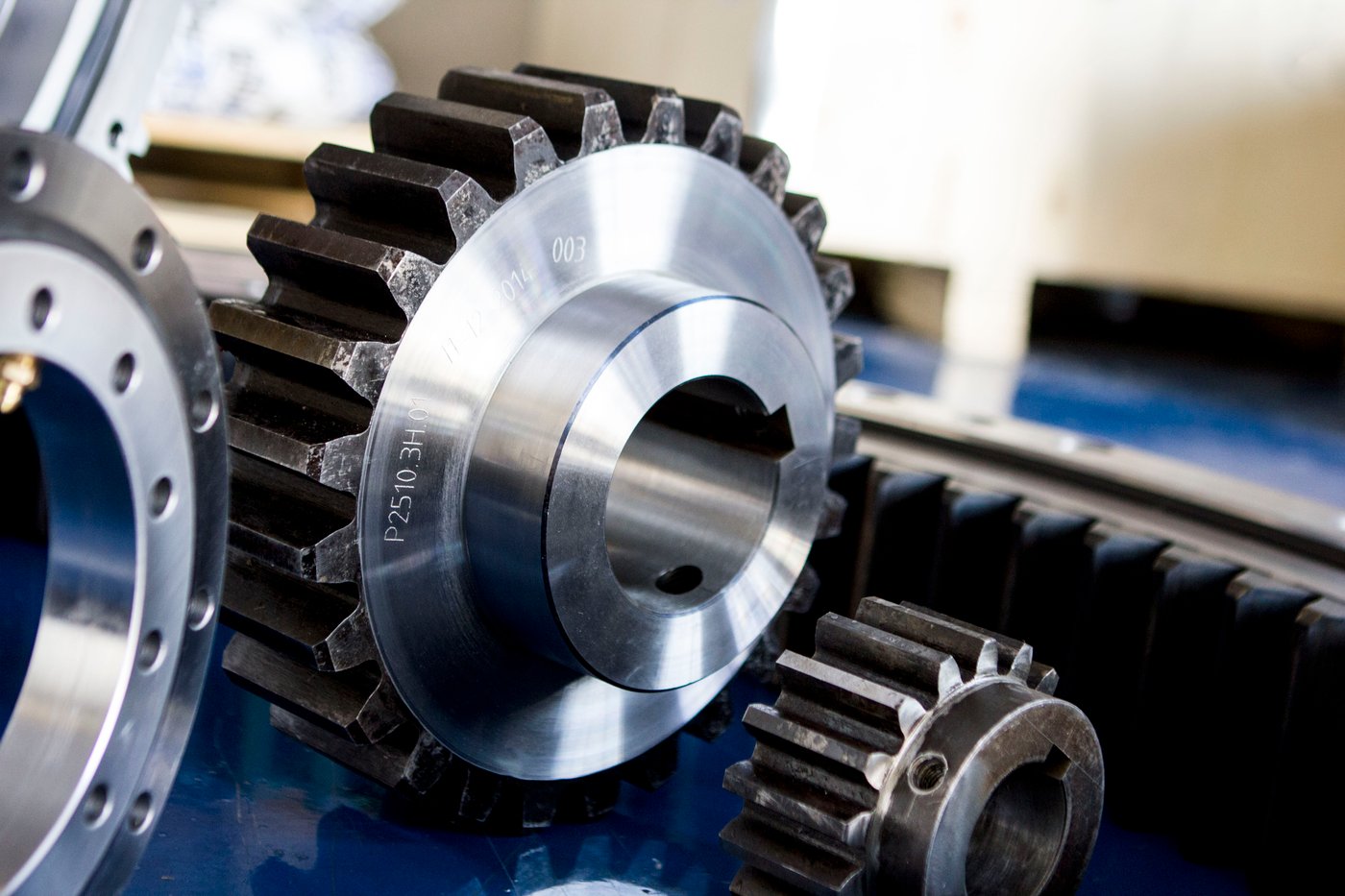

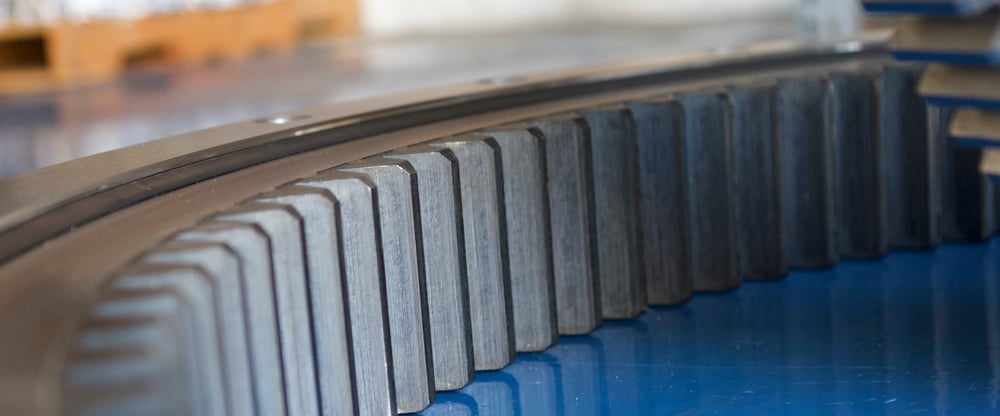
Equipment manufacturers and engineers frequently face critical decisions about manufacturing precision when specifying slewing bearings, drives, and rings. Standard manufacturing tolerances—typically ±0.010" to ±0.020" for dimensional features—deliver adequate performance in many applications at minimal cost. However, precision machining with tight tolerances—often ±0.001" to ±0.005"—costs substantially more through additional machining operations, slower production rates, enhanced quality control, and specialized tooling requirements.
This cost differential creates tension between engineering ideals and budget realities. Finance teams question whether precision machining justifies its premium costs. Procurement departments pressure engineers to accept standard tolerances reducing component expenses. Project managers worried about schedules favor faster standard manufacturing over time-consuming precision processes.
Yet in high-speed rotation applications, heavy-load systems, precision positioning equipment, or installations where downtime costs are extreme, the seemingly abstract quality improvements from precision machining translate directly into quantifiable financial benefits. Smoother rotation reduces parasitic power losses saving energy costs throughout equipment life. Reduced vibration extends bearing life by 50-200% while protecting surrounding equipment from fatigue damage. Lower wear rates triple or quadruple service intervals slashing maintenance costs. Extended component life defers expensive capital replacement expenditures by years.
When these benefits are properly quantified and compared against precision machining premiums through rigorous return on investment analysis, the financial case for tight tolerances becomes compelling—particularly in applications where equipment operates continuously, downtime is expensive, energy costs are significant, or component replacement is difficult and costly.
This comprehensive financial and technical analysis examines how manufacturing precision affects slewing system performance across multiple dimensions, quantifies the operational and financial benefits of precision machining, identifies application characteristics where tight tolerances deliver maximum ROI, provides frameworks for cost-benefit analysis supporting specification decisions, and demonstrates through real-world examples how precision machining investments pay for themselves many times over through reduced lifecycle costs.
Understanding Manufacturing Precision and Its Impacts
Before examining financial returns, it's essential to understand what precision machining entails and how dimensional accuracy affects slewing system performance.
Defining Precision Manufacturing
Manufacturing precision refers to how closely actual dimensions match specified values and how consistently dimensions are maintained across multiple production units. Standard tolerance ranges vary by component size and manufacturing method, but typical commercial tolerances for slewing rings might specify dimensions as ±0.010" to ±0.020" on critical features.
Precision machining tightens these tolerances substantially—often to ±0.001" to ±0.005" depending on feature criticality and size. Achieving these tighter tolerances requires grinding rather than turning for bearing raceways, precision boring for mounting holes, controlled-temperature machining to prevent thermal distortion, multiple machining passes with final finishing operations, and comprehensive inspection with coordinate measuring equipment.
The cost implications are significant. Precision machining can increase manufacturing costs by 30-80% compared to standard tolerance production depending on component complexity and size. This premium stems from slower material removal rates with precision operations, additional setup time for multiple machining passes, enhanced fixturing and tooling costs, longer inspection times with more measurement points, and potentially lower production yields as marginal parts are rejected.
Critical Tolerance Specifications
Not all dimensions require precision machining—focusing tight tolerances on performance-critical features optimizes the cost-benefit trade-off. For slewing bearings and rings, critical tolerance specifications include:
Raceway Geometry: Flatness, roundness, and surface finish of bearing raceways directly affect rolling element load distribution. Standard tolerances might specify 0.003-0.005" total indicator runout (TIR) for raceway roundness. Precision grinding can achieve 0.0005-0.001" TIR—a 3-5× improvement ensuring uniform load sharing across all rolling elements.
Mounting Surface Flatness: The flatness of mounting flanges affects alignment and load distribution. Standard machining might achieve 0.003-0.005" flatness per foot of diameter. Precision grinding can deliver 0.001-0.002" per foot—critical for preventing stress concentrations and misalignment.
Concentricity: The alignment between inner and outer raceways, mounting surfaces, and rotation axes affects rotational smoothness. Standard tolerances might specify 0.005-0.010" concentricity. Precision machining achieves 0.001-0.003"—dramatically reducing runout during rotation.
Gear Tooth Accuracy: For geared slewing rings, tooth spacing (pitch), profile accuracy, and surface finish affect mesh quality. Standard hobbing or shaping might achieve AGMA Quality 7-8. Precision grinding can deliver AGMA Quality 10-12—substantially improving mesh smoothness and reducing noise.
Mounting Hole Position: Bolt hole location accuracy affects assembly alignment and stress distribution. Standard drilling might position holes within ±0.010". Precision boring can achieve ±0.002-0.003"—ensuring proper bolt alignment and uniform load distribution.
SlewPro's precision manufacturing capabilities enable tight tolerance specifications on critical features while using standard tolerances on non-critical dimensions, optimizing performance benefits against manufacturing costs.
Performance Benefit #1: Smooth Rotation and Reduced Friction
The most immediate benefit of precision machining appears in rotational quality—how smoothly and efficiently slewing systems rotate.
The Mechanics of Smooth Rotation
Rotational smoothness depends on uniform load distribution across rolling elements and consistent geometry throughout the rotation cycle. When raceways exhibit poor roundness or waviness, rolling elements experience varying loads as the bearing rotates. Some elements carry excessive loads while others carry minimal loads or even lose contact entirely.
This non-uniform loading creates resistance variations during rotation—the torque required to maintain constant speed varies cyclically. The varying resistance manifests as roughness or cogging that operators can feel. In precision positioning applications, these variations degrade accuracy. In high-speed applications, they create vibration and noise.
Precision-ground raceways with tight roundness tolerances (0.0005-0.001" TIR) maintain near-perfect circular geometry. Rolling elements maintain consistent contact and load sharing throughout rotation. The resistance to rotation remains nearly constant regardless of angular position. The result is exceptionally smooth rotation free from the cyclic variation characteristic of standard-tolerance bearings.
Friction Reduction and Energy Savings
The efficiency implications of smooth rotation translate directly to energy savings in continuously operating equipment. Consider a slewing drive rotating continuously at 2 RPM under moderate load. Standard tolerance manufacturing might result in parasitic friction consuming 0.8 kW. Precision manufacturing reducing friction by 15-20% saves 0.12-0.16 kW.
Over 8,000 annual operating hours at $0.12/kWh, this saves $115-154 annually per drive. For a solar tracking installation with 500 drives, annual energy savings reach $57,500-77,000. Over a 20-year installation life, the cumulative savings total $1,150,000-1,540,000—far exceeding the precision machining premium for the entire installation.
The efficiency improvement stems from multiple mechanisms. Uniform rolling element loading reduces parasitic friction from load concentration. Improved surface finish on precision-ground raceways reduces sliding friction. Better concentricity reduces seal drag from runout-induced seal deflection. Precision gear tooth profiles reduce mesh friction from profile errors.
High-Speed Application Benefits
The smoothness benefits from precision machining become increasingly valuable in high-speed applications. At low speeds (under 5 RPM), rotational variations from standard tolerances create minor performance issues. At higher speeds (20-50+ RPM), the same geometric variations create significant vibration, noise, and stress.
Consider a rotating radar platform operating at 30 RPM. Standard tolerance bearings might exhibit 0.005" runout creating cyclic forces at 0.5 Hz (30 cycles per minute). At this frequency, the forces can excite structural resonances causing vibration amplification. Precision bearings with 0.001" runout reduce excitation forces by 80%, dramatically lowering vibration levels.
High-speed applications also experience increased wear from friction and heat. The friction reduction from precision manufacturing extends bearing life while reducing cooling requirements. In sealed bearings, reduced friction means lower internal temperatures, extending lubricant life and seal durability.
Quantifying Smoothness Improvements
Rotational smoothness can be objectively measured, enabling quantitative comparison between precision and standard manufacturing.
Torque Ripple Measurement: Monitoring the torque variation during constant-speed rotation quantifies smoothness. Standard tolerance bearings might exhibit 8-12% torque variation from peak to trough. Precision bearings typically show 2-4% variation—a 60-75% improvement.
Vibration Analysis: Accelerometers mounted on rotating structures measure vibration amplitude and frequency content. Precision bearings reduce vibration amplitude by 50-70% at rotational frequency compared to standard tolerances. Harmonic content—vibration at multiples of rotational speed—drops by 70-85%.
Positioning Accuracy: For precision positioning applications, the angular position error during rotation quantifies smoothness. Standard bearings might exhibit ±0.3-0.5 degree positioning error from geometric variations. Precision bearings achieve ±0.05-0.1 degree—a 5-10× improvement enabling tighter process control or better tracking accuracy.
Performance Benefit #2: Vibration Reduction
Vibration reduction represents one of the most valuable yet often underestimated benefits of precision machining, particularly in applications where vibration causes collateral damage extending beyond the bearing itself.
Sources of Vibration in Slewing Systems
Vibration in rotating systems originates from geometric imperfections creating cyclic forces. Raceway runout causes rolling elements to accelerate and decelerate slightly with each revolution, creating forces at the rotational frequency. Waviness—periodic variations in raceway diameter—creates forces at frequencies related to the number of waves around the circumference. Out-of-balance conditions from mass distribution variations create centrifugal forces.
Standard tolerance manufacturing accumulates these geometric variations. A bearing with 0.005" runout, waviness amplitude of 0.003", and 0.010" concentricity error between inner and outer rings creates substantial vibration. The various geometric errors create forces at different frequencies that may coincide with structural resonances amplifying vibration.
Precision machining systematically reduces all geometric error sources. Runout drops to 0.001" or less. Waviness reduces to 0.0005-0.001" amplitude. Concentricity improves to 0.002-0.003". The cumulative effect is vibration reduction of 60-80% compared to standard manufacturing.
Vibration Damage Mechanisms
While vibration might seem like a comfort or noise issue, it creates real mechanical damage that accumulates over time. Fatigue damage from cyclic stress affects structures supporting the bearing. Welds, bolted connections, and structural members experience stress cycles from vibration that can lead to crack formation and propagation.
Adjacent equipment suffers from vibration transmission. Electrical cabinets, sensors, cameras, and other precision equipment mounted on vibrating structures experience accelerated wear or malfunction. In extreme cases, vibration can cause fasteners to loosen, electrical connections to fail, or sensitive equipment to operate erratically.
The bearing itself experiences accelerated wear from vibration. Vibration-induced micro-slip at rolling element contacts creates fretting wear. Lubricant film thickness variations from vibration can allow boundary lubrication conditions accelerating surface fatigue. Cage wear accelerates as rolling elements bounce rather than rolling smoothly.
Quantified Vibration Reduction Benefits
The financial benefits of vibration reduction manifest through multiple mechanisms, each contributing to total cost of ownership improvements.
Extended Bearing Life: Vibration reduction from precision manufacturing extends bearing life substantially. Field studies show that reducing vibration by 60-70% through tighter tolerances extends bearing L10 life (the life at which 10% of bearings fail) by 100-200%. A bearing with 12-year design life using standard manufacturing might achieve 24-36 years with precision manufacturing—doubling or tripling service life.
For a $25,000 large-diameter slewing bearing, extending life from 12 to 30 years defers one replacement cycle worth $25,000 plus installation costs of approximately $15,000. The $40,000 avoided cost far exceeds the $5,000-8,000 precision machining premium, delivering 5-8× return on the precision investment.
Reduced Structural Maintenance: Vibration causes fatigue damage requiring periodic structural inspection and repair. Equipment operating with high vibration might require annual structural inspection costing $5,000-10,000 and periodic weld repair averaging $3,000-5,000 every 3-5 years.
Precision manufacturing reducing vibration by 70% can extend structural inspection intervals from annual to every 3-5 years and eliminate most vibration-induced repairs. Over 20 years, this saves $80,000-150,000 in avoided structural maintenance—again far exceeding precision machining costs.
Protected Adjacent Equipment: Sensitive equipment mounted on vibrating structures experiences accelerated failure. Cameras, sensors, electrical cabinets, and control systems may require replacement every 5-7 years under high vibration but last 15-20 years with reduced vibration.
For a wind turbine yaw system with $50,000 in sensitive equipment, vibration-induced failures requiring replacement every 6 years create recurring costs. Precision manufacturing extending equipment life to 18 years eliminates two replacement cycles worth $100,000—representing substantial savings beyond the bearing itself.
High-Load Application Vibration Issues
Heavy-load applications prove particularly sensitive to vibration because geometric errors create larger forces. A 0.005" runout in a lightly loaded bearing might generate minimal vibration forces. The same 0.005" runout in a heavily loaded bearing carrying 500,000 lbs generates substantial cyclic forces as load shifts between rolling elements.
Precision manufacturing becomes increasingly valuable as loads increase. The vibration reduction benefits scale roughly linearly with load levels. Applications with loads exceeding 100,000 lbs typically justify tight tolerances based solely on vibration reduction—before considering other benefits.
SlewPro's heavy-duty slewing bearings for demanding applications incorporate precision grinding and tight tolerances specifically to minimize vibration under the extreme loads these bearings experience.
Performance Benefit #3: Reduced Wear Rates
Precision manufacturing dramatically reduces wear rates, extending maintenance intervals and component service life while reducing lubricant consumption and contamination generation.
Uniform Load Distribution and Wear
Wear in rolling element bearings stems primarily from contact stress between rolling elements and raceways. When geometric imperfections cause non-uniform load distribution, some rolling elements carry excessive loads while others carry minimal loads. The overloaded elements experience accelerated wear while underloaded elements contribute little to load capacity.
Standard tolerance bearings with 0.004-0.006" raceway runout might have 60-70% of rolling elements carrying meaningful loads while 30-40% are essentially unloaded. The loaded elements experience 40-60% higher contact stress than they would with uniform load distribution. This elevated stress accelerates wear exponentially—doubling contact stress can quadruple wear rates.
Precision manufacturing with 0.0008-0.001" runout achieves 90-95% rolling element participation in load sharing. Nearly all elements carry appropriate loads with minimal overload. Contact stress reduces by 30-40% compared to standard tolerances. Wear rates drop by 50-75% as a result.
The practical implication: a bearing requiring lubrication every 500 hours under standard manufacturing might extend to 1,500-2,000 hours with precision manufacturing. Over 20,000 operating hours, maintenance cycles reduce from 40 to 10-13 interventions—saving substantial labor costs and reducing downtime.
Surface Finish Effects on Wear
Beyond dimensional accuracy, surface finish quality affects wear rates. Standard turning or milling operations leave tool marks with surface roughness of 63-125 Ra (microinches). Precision grinding achieves 16-32 Ra—substantially smoother surfaces.
Smoother surfaces reduce friction during rolling and sliding micro-motions. Lower friction means less heat generation and reduced wear. The improved surface finish also promotes better lubricant film formation. Lubricants maintain thicker, more stable films on smooth surfaces compared to rough surfaces, providing better protection against boundary lubrication wear.
Field measurements show that surface finish improvements from precision grinding reduce wear rates by 30-50% independent of the dimensional accuracy benefits. The combined effect of geometric accuracy and surface finish can reduce wear by 60-80% compared to standard manufacturing.
Gear Tooth Wear Reduction
For geared slewing rings, precision gear manufacturing dramatically reduces tooth wear and extends gear life. Standard hobbed or shaped gears with AGMA Quality 7-8 exhibit tooth spacing errors of ±0.003-0.005" and profile errors of similar magnitude. These errors cause uneven load distribution among simultaneously meshing teeth and create impact loading as teeth enter and exit mesh.
Precision ground gears achieving AGMA Quality 10-12 reduce spacing errors to ±0.0005-0.001" and profile errors to similar levels. Load distribution improves dramatically with 3-4 teeth sharing loads that might concentrate on 1-2 teeth with standard manufacturing. Impact loading essentially disappears as teeth enter mesh smoothly rather than with impact.
The wear rate reduction in precision gears can reach 70-85% compared to standard manufacturing. A gear requiring replacement at 15,000 hours under standard manufacturing might last 50,000-80,000 hours with precision grinding—extending life by 3-5×. For large-diameter geared slewing rings costing $40,000-80,000, this life extension represents enormous value.
Contamination Generation Reduction
Wear doesn't just reduce component life—it generates contamination that accelerates further wear in a destructive feedback loop. Wear particles from surfaces act as abrasive contaminants accelerating wear throughout the system. In sealed bearings, wear particles contaminate lubricant reducing its protective effectiveness.
Precision manufacturing reducing wear by 70% also reduces contamination generation by similar amounts. Lubricants remain cleaner longer, maintaining protective properties and extending service intervals. The cleaner operating conditions preserve seal integrity and reduce the risk of accelerated wear from contamination.
Laboratory testing shows that lubricant particle counts in precision bearings run 60-75% lower than standard bearings after equivalent operating hours. The cleaner lubricant extends its useful life from 2,000-3,000 hours typical of standard bearings to 5,000-8,000 hours in precision bearings—reducing lubricant consumption and disposal costs while extending relubrication intervals.
Performance Benefit #4: Extended Service Life
The cumulative effect of smoother operation, reduced vibration, and lower wear rates is dramatically extended service life—often the most financially significant precision machining benefit.
Life Extension Quantification
Bearing service life predictions use well-established engineering models relating contact stress, load cycles, and material properties to fatigue life. The famous bearing life equation demonstrates that life varies inversely with the cube of contact stress—reducing stress by 30% increases life by approximately 2.4×.
Precision manufacturing reduces contact stress through multiple mechanisms simultaneously. Uniform load distribution from tight geometric tolerances reduces peak contact stress by 30-40%. Smoother surfaces reduce friction and heat generation extending material fatigue limits. Reduced vibration eliminates stress cycles from dynamic loads.
The combined effect can extend bearing life by 200-400% compared to standard manufacturing. A bearing with 10-year design life using standard tolerances might achieve 20-40 years with precision manufacturing. For equipment with 20-30 year design lives, this means eliminating one or two bearing replacement cycles—enormous savings considering replacement costs include not just component costs but also disassembly, downtime, labor, and reassembly.
Replacement Cost Avoidance
The financial impact of extended service life is most dramatic for bearings that are expensive to replace. Large-diameter slewing bearings in critical equipment can cost $30,000-100,000+ for the component alone. Replacement labor might require 100-300 hours of skilled technician time at $100-150/hour totaling $10,000-45,000. Downtime during replacement can cost $5,000-50,000+ per day depending on equipment revenue generation.
Total replacement costs often reach $50,000-200,000 for large, critical slewing systems. Precision manufacturing premiums of $8,000-15,000 that eliminate even one replacement cycle deliver 3-10× return on investment before considering any other benefits.
For installations in difficult locations—offshore platforms, remote mining sites, or tall structures—replacement costs escalate further. Mobilizing specialized equipment and crews, working in challenging environments, and extended downtime while waiting for weather windows can push replacement costs to $500,000-1,000,000+. In these extreme cases, precision manufacturing premiums represent insurance against catastrophically expensive replacements.
Predictable Maintenance Scheduling
Extended service life from precision manufacturing also enables more predictable maintenance planning. Standard tolerance bearings with higher wear rates and greater variability exhibit less predictable failure timing. Some units might fail at 60% of design life while others exceed 140%—this variability complicates maintenance scheduling and inventory management.
Precision bearings with lower wear rates and more uniform stress distribution exhibit more predictable service lives. Failure timing clusters more tightly around expected life. This predictability enables condition-based maintenance programs that monitor bearing condition and schedule replacement based on actual wear rather than conservative time-based schedules.
The economic benefit: rather than replacing bearings conservatively at 60% of expected life to avoid unexpected failures, predictable precision bearings can safely operate to 80-90% of expected life. This 30-50% extension of actual service time multiplies the already substantial life improvement from precision manufacturing.
ROI Analysis Framework
Determining whether precision machining justifies its costs requires systematic return on investment analysis accounting for all benefits and costs over equipment lifecycles.
Cost Components
Begin by quantifying the precision machining premium. For most slewing bearings, precision manufacturing adds 30-80% to component costs depending on size and complexity. A $20,000 standard tolerance bearing might cost $26,000-36,000 with precision machining—a $6,000-16,000 premium.
This initial cost premium represents the investment requiring justification through lifecycle benefits. Additional costs might include extended lead times affecting project schedules or engineering time for tolerance specification and verification.
Benefit Quantification
Systematically quantify each benefit category over equipment design life (typically 15-30 years for industrial equipment):
Energy Savings: Calculate annual energy consumption reduction from friction improvement (typically 15-20%). Multiply by annual operating hours, energy rate, and equipment life. For continuously operating equipment, 20-year energy savings can reach $50,000-200,000 per bearing.
Maintenance Cost Reduction: Estimate maintenance interval extension (typically 2-4×). Calculate labor savings from fewer interventions plus reduced lubricant consumption. Twenty-year maintenance savings often total $30,000-80,000 for bearings requiring significant service labor.
Extended Bearing Life: Quantify replacement cycles avoided through life extension (1-2 replacements for equipment with 20-30 year lives). Calculate avoided replacement costs including components, labor, and downtime. This single benefit often represents $50,000-200,000+ in avoided costs.
Reduced Vibration Damage: Estimate avoided structural repairs and protected equipment replacement from vibration reduction. This category can add $50,000-150,000 in savings for installations with sensitive adjacent equipment or expensive structures.
Downtime Reduction: Quantify production value or revenue during avoided downtime from failures and maintenance. For revenue-generating equipment, this can be the largest benefit category reaching $100,000-500,000+ over equipment life.
Break-Even and Payback Analysis
Calculate payback period—how long until cumulative benefits equal the precision machining premium. For many applications, payback occurs in 2-5 years even though benefits accumulate over 20-30 year equipment lives.
Example calculation for a $30,000 standard tolerance bearing with $10,000 precision machining premium:
- Annual energy savings: $4,500
- Annual maintenance savings: $3,000
- Avoided replacement (year 15): $65,000 present value $35,000
- Reduced vibration damage: $2,000/year
- Total 15-year benefits (present value): $185,000
- ROI: ($185,000 - $10,000) / $10,000 = 1,750% or 17.5× return
Payback period: approximately 1.5 years based on annual operating savings alone, ignoring the major benefit of avoided replacement.
Sensitivity Analysis
ROI depends on assumptions about operating hours, energy costs, failure rates, and replacement costs. Conduct sensitivity analysis varying key assumptions:
- Operating hours (4,000 vs. 8,000 vs. continuous)
- Energy costs ($0.08 vs. $0.12 vs. $0.16/kWh)
- Life extension factor (2× vs. 3× vs. 4×)
- Replacement cost ($50,000 vs. $100,000 vs. $150,000)
Sensitivity analysis reveals which applications deliver highest ROI (continuous operation, high energy costs, expensive replacement) and which deliver marginal returns (intermittent use, cheap energy, easy replacement).
SlewPro's application engineering support includes ROI analysis assistance helping customers quantify precision machining benefits for their specific applications and operating conditions.
Application Scenarios: When Precision Delivers Maximum Value
Not all applications justify precision machining investment—understanding which scenarios deliver highest ROI enables optimal specification decisions.
High-Speed Applications
Applications operating above 20-30 RPM generate substantial returns from precision manufacturing. The smoothness and vibration reduction benefits scale with speed—faster rotation amplifies the performance differences between precision and standard tolerances.
Example: Radar Tracking Platform operating at 40 RPM continuously. Precision machining premium: $12,000. Annual benefits: $8,500 (energy) + $4,000 (reduced maintenance) + $3,500 (vibration reduction) = $16,000. Payback: 0.75 years. Twenty-year ROI: 25×.
Heavy-Load Systems
Applications with loads exceeding 100,000 lbs experience geometric error forces scaled by load magnitude. Precision manufacturing reducing these forces by 70-80% delivers enormous vibration and wear benefits.
Example: Large Mining Shovel with 800,000 lb bearing load. Precision premium: $45,000. Extended life avoids $250,000 replacement. Reduced vibration saves $120,000 in structural maintenance. Twenty-year benefits: $520,000. ROI: 10.5×.
Continuous Operation Equipment
Equipment operating continuously (7,000-8,000+ hours annually) accumulates benefits rapidly. Energy savings, maintenance reductions, and wear all scale with operating hours.
Example: Solar Tracking System (500 drives operating 3,500 hours/year). Precision premium per drive: $800. Fleet premium: $400,000. Annual fleet benefits: $385,000 (energy) + $175,000 (maintenance). Payback: 1.3 years. Twenty-year ROI: 14×.
Difficult Access Installations
Equipment in difficult locations—offshore platforms, tall structures, remote sites—experience enormously expensive replacement operations. Extended service life from precision manufacturing becomes extremely valuable.
Example: Offshore Wind Turbine Yaw Bearing requiring vessel mobilization for replacement. Precision premium: $25,000. Avoided replacement (vessel, crew, downtime): $850,000. Even ignoring operating benefits, single replacement avoidance delivers 33× ROI.
Precision Positioning Applications
Applications requiring accurate positioning benefit from the geometric accuracy precision manufacturing delivers. Improved positioning enables tighter process control or better product quality.
Example: Automated Assembly System requiring ±0.1 degree positioning. Precision machining enables accuracy impossible with standard tolerances. Improved positioning reduces defect rates by 2.5%, saving $95,000 annually in scrap. Five-year benefit: $475,000 on $18,000 precision investment. ROI: 25×.
When Standard Tolerances Suffice
Conversely, some applications don't justify precision premiums. Low-speed (under 5 RPM), intermittent operation (under 1,000 hours annually), light loads (under 10,000 lbs), and easy access for cheap replacement characterize applications where standard tolerances provide adequate performance at optimal cost.
Example: Manual Rotating Work Table for welding fixtures. Operation: 500 hours/year at 0.5 RPM. Standard bearing: $3,500. Precision alternative: $5,500. Benefits negligible for this application. Standard tolerances represent optimal choice.
Implementation Considerations
Capturing precision machining benefits requires proper implementation from specification through installation and operation.
Specification Best Practices
Specify tight tolerances only on performance-critical features—this optimizes cost-benefit trade-offs. Raceway geometry (roundness, flatness, surface finish), mounting surfaces, concentricity, and gear teeth justify precision. Non-critical features like external diameters, bolt hole depths, or cosmetic surfaces can use standard tolerances.
Provide complete tolerance specifications including geometric dimensioning and tolerancing (GD&T) callouts defining perpendicularity, parallelism, and concentricity requirements. Surface finish specifications should include both roughness (Ra) and waviness requirements. Gear quality specifications should reference AGMA or ISO standards defining acceptable pitch, profile, and finish.
Work with manufacturers early in design. SlewPro's engineering team collaborates with customers to identify which tolerances critically affect performance and which can relax without consequences—optimizing specifications for performance and cost.
Quality Verification
Implement inspection programs verifying precision manufacturing quality. Coordinate measuring machine (CMM) inspection confirming dimensional accuracy. Surface finish measurement with profilometers verifying Ra and waviness specifications. Gear inspection on gear measurement centers for precision tooth geometry. Roundness measurement on specialized roundness testers for critical raceways.
Document inspection results providing baseline data for future reference. Statistical process control tracking key dimensions across production runs ensures consistency. First article inspection on initial production units validates manufacturing processes before full production.
Proper Installation
Precision manufacturing benefits evaporate if installation introduces errors. Mounting surface preparation must achieve specified flatness—machining after welding, stress relieving to remove distortion, and precision grinding for critical surfaces. Alignment verification before final torquing using dial indicators, laser alignment, or coordinate measurement.
Proper bolt torque and sequence prevents distortion during installation. Incremental tightening in star patterns distributes loads uniformly. Final torque verification ensures adequate preload without overtightening. Alignment re-verification after torquing confirms geometry remains within specifications.
Maintenance Programs
Maintain precision through proper service practices. Clean environments during maintenance preventing contamination introduction. Proper lubricants at correct intervals preserving surface protection. Gentle handling avoiding impact damage to precision surfaces. Regular inspection monitoring for developing wear or damage.
Condition monitoring programs track performance over time—vibration analysis, temperature monitoring, and lubricant analysis detect degradation enabling proactive intervention before failures occur.
Future Trends in Precision Manufacturing
Manufacturing technology continues advancing, expanding precision capabilities while potentially reducing cost premiums.
Advanced Machining Technologies
Hard turning enables finishing hardened bearing raceways with single-point cutting tools rather than grinding—potentially reducing precision manufacturing costs while maintaining quality. Laser-assisted machining facilitates difficult materials. Cryogenic machining improves tool life and surface quality enabling finer tolerances economically.
In-Process Measurement
Real-time dimensional measurement during machining enables adaptive control compensating for tool wear or thermal drift. This improves consistency and reduces scrap from parts machining outside tolerances. Automated measurement reduces inspection time and labor costs, partially offsetting precision machining expenses.
Additive Manufacturing
Metal 3D printing may eventually enable complex geometries with integrated precision features. However, current additive technology cannot achieve the surface finish and dimensional accuracy required for precision slewing bearings. Hybrid approaches combining additive manufacturing for complex structures with conventional precision machining for critical surfaces may emerge.
Predictive Quality
Machine learning models analyzing process parameters predict part quality before measurement, enabling real-time process adjustment maintaining precision while reducing scrap and rework. Digital twin technology simulating machining processes optimizes parameters for precision while minimizing cycle time and cost.
Conclusion
Precision machining represents an investment delivering measurable, quantifiable returns through smoother rotation, reduced vibration, lower wear rates, and extended service life. While precision tolerances increase manufacturing costs by 30-80%, the lifecycle benefits often exceed this premium by 10-25× in applications where precision matters—high-speed rotation, heavy loads, continuous operation, or difficult access installations.
Energy savings from friction reduction accumulate to $50,000-200,000 over equipment life. Maintenance cost reductions from extended intervals total $30,000-80,000. Extended bearing life avoiding one or two replacement cycles saves $50,000-200,000+. Reduced vibration damage protecting structures and adjacent equipment adds $50,000-150,000 in value. For revenue-generating equipment, downtime reduction contributes additional hundreds of thousands in benefits.
The ROI calculation is compelling: precision machining premiums of $5,000-45,000 routinely deliver lifecycle benefits of $150,000-500,000+—representing 10-25× returns on investment with payback periods of 1-3 years. Not all applications justify precision investment, but for demanding applications operating continuously, at high speeds, under heavy loads, or in difficult locations, tight tolerances make all the difference between adequate performance and exceptional reliability.
SlewPro's precision manufacturing capabilities deliver the tight tolerances and superior quality that enable these performance benefits. Our comprehensive slewing bearing range includes both standard and precision options, with engineering support helping customers identify optimal tolerance specifications balancing performance requirements against budget constraints.
Equipment manufacturers and operators should evaluate precision machining investments through comprehensive ROI analysis accounting for all lifecycle benefits rather than focusing solely on initial costs. When properly analyzed, precision manufacturing consistently