
Engineers and equipment designers frequently encounter confusion when specifying rotational components for their applications. The terms "slewing ring," "slewing bearing," "turntable bearing," and simply "turntable" are often used interchangeably in industry conversations, technical documentation, and supplier catalogs—yet these terms can refer to distinctly different products with different capabilities, applications, and cost structures.
This terminology confusion creates real problems. Engineers may specify the wrong component type for their application, leading to performance issues or unnecessary costs. Procurement teams struggle to compare quotations when suppliers use different terminology for similar products. Equipment designers waste time researching solutions that don't actually match their requirements because search terms lead them down incorrect paths.
The confusion is understandable. Both slewing rings and turntables enable rotational motion. Both support loads while rotating. Both come in circular configurations with mounting provisions. From a distance, they can even look quite similar. However, the similarities are largely superficial—the underlying design principles, performance characteristics, and appropriate applications differ substantially.
This comprehensive guide cuts through the terminology confusion to explain exactly what distinguishes slewing rings from turntables, when each solution is appropriate, and how to make the right selection for your specific application. Whether you're designing heavy construction equipment, precision positioning systems, material handling machinery, or automated manufacturing equipment, understanding these distinctions will help you specify the optimal rotational solution.
Understanding Slewing Rings: Precision-Engineered Bearing Systems
Slewing rings—also called slewing bearings or slewing ring bearings—represent precision-engineered bearing assemblies specifically designed to support combined loads while enabling controlled rotational motion.
What Is a Slewing Ring?
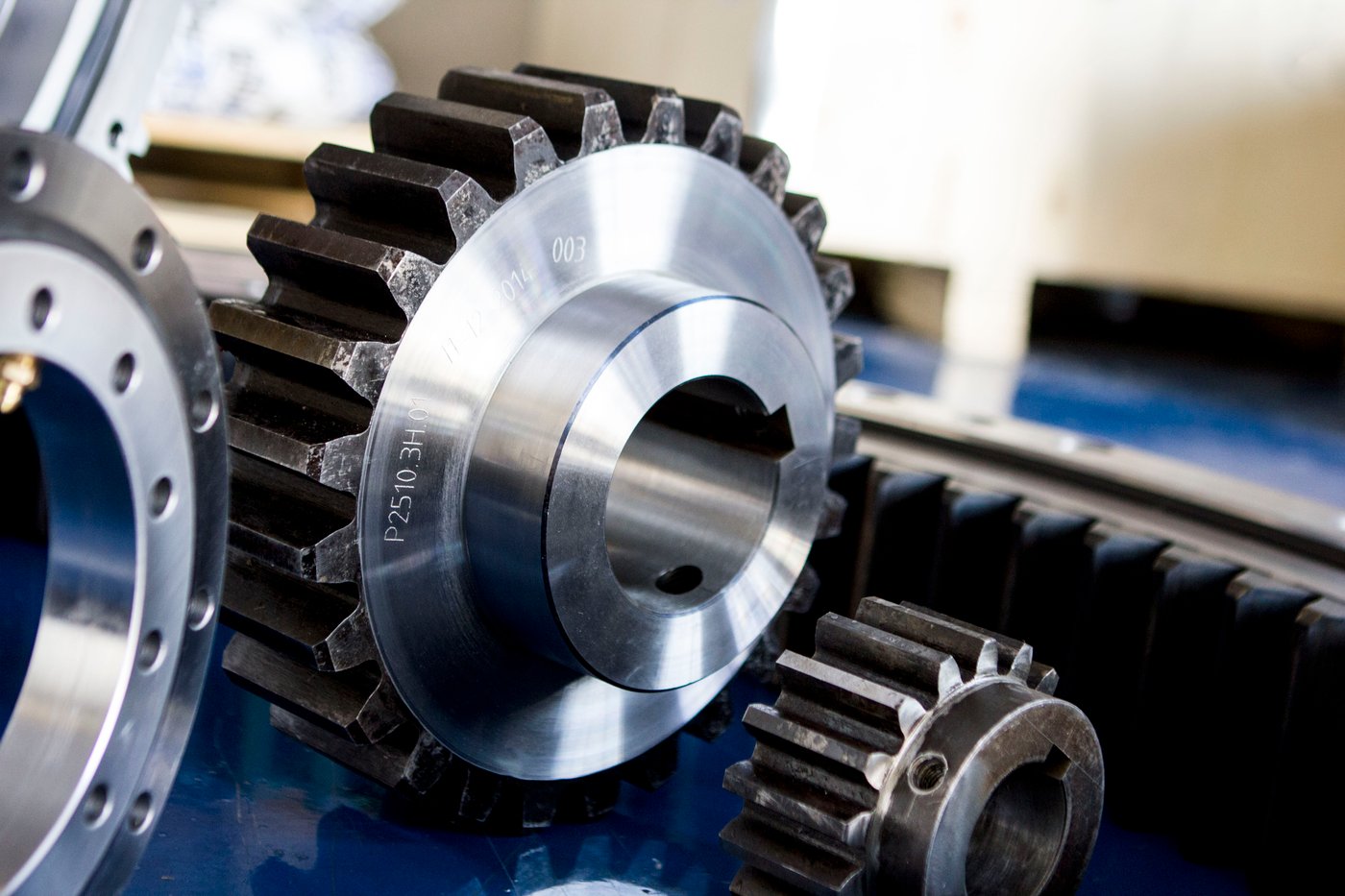
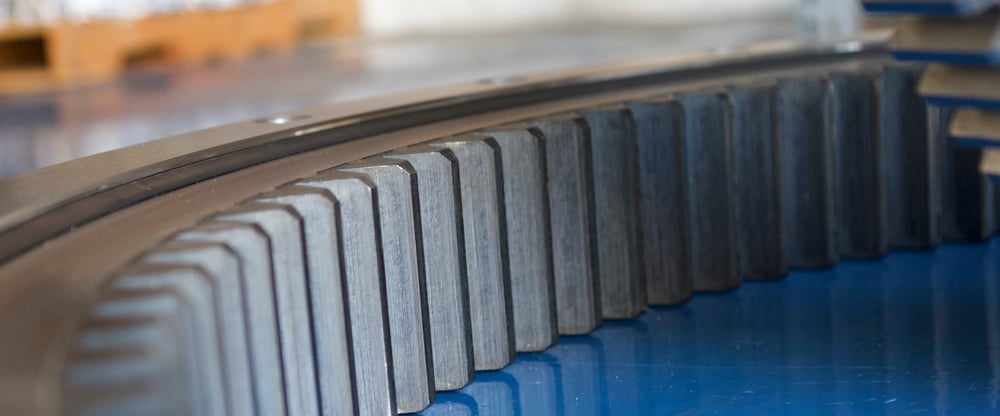
A slewing ring is an integrated bearing assembly consisting of inner and outer rings with raceways that contain rolling elements (balls, cylindrical rollers, or tapered rollers) in precisely controlled arrangements. The rings include mounting holes or surfaces for attachment to equipment structures. Many slewing rings incorporate integral gears (internal or external) for driving the rotational motion.
The key characteristic that defines slewing rings is their engineered bearing design. These aren't simple rotating platforms—they're sophisticated bearing assemblies with carefully specified load ratings, precise manufacturing tolerances, and documented performance characteristics. SlewPro's slewing ring bearings range from small single-row designs to massive triple-roller configurations supporting millions of pounds.
Types of Slewing Ring Configurations
Slewing rings come in multiple configurations optimized for different loading conditions:
Single-Row Ball Bearings use a single row of balls between inner and outer rings. These designs excel in applications requiring relatively light loads with moderate moment capacity. They offer compact cross-sections and cost-effective solutions for applications where loads are well-defined and moderate. SlewPro's 30 Series and 21 Series slewing rings provide single-row ball bearing solutions for light-duty applications including solar trackers, small cranes, and light-duty positioning equipment.
Double-Row Ball Bearings incorporate two rows of balls with contact angles optimized for combined axial and radial loads. This configuration provides higher load capacity than single-row designs while maintaining relatively compact dimensions. The dual ball rows enable superior moment capacity, making these bearings suitable for applications with significant overturning moments. SlewPro's 45 Series slewing rings deliver double-row ball bearing performance for medium-duty cranes, aerial work platforms, and material handling equipment.
Crossed Roller Bearings use cylindrical rollers arranged in a cross pattern where adjacent rollers sit perpendicular to each other. This configuration delivers exceptional rigidity and precision with minimal cross-sectional height. SlewPro's 50 Series crossed roller slewing rings excel in applications requiring high stiffness and positioning accuracy, such as medical imaging equipment, precision rotary tables, and robotic systems.
Triple-Roller Bearings represent the heavy-duty champions of slewing ring designs. These incorporate three rows of rollers—two axial rows and one radial row—to handle extreme loads. SlewPro's 100 Series triple-roller bearings support thrust capacities up to 23,000,000 pounds and moment capacities to 61,000,000 foot-pounds. Applications include large cranes, mining equipment, and heavy industrial machinery.
Load Capacity and Engineering Specifications
One of the defining characteristics of slewing rings is their documented, engineered load capacity. Manufacturers provide detailed specifications including axial load capacity (loads parallel to the rotation axis), radial load capacity (loads perpendicular to the rotation axis), moment load capacity (tilting loads), combined loading charts showing capacity under simultaneous load types, and service life calculations based on loading and duty cycles.
These specifications enable engineers to properly size bearings for their applications through rigorous analysis rather than guesswork. The documented capacity allows confident specification with appropriate safety factors and predictable performance.
Precision Manufacturing Requirements
Slewing rings require precision manufacturing to deliver their performance capabilities. Ring flatness must be controlled to prevent uneven load distribution. Raceway geometry requires precise grinding to ensure uniform rolling element contact. Mounting hole locations need accuracy for proper installation alignment. Rolling element quality and dimensional consistency affect bearing life and smoothness.
This precision manufacturing comes at a cost—slewing rings represent engineered products with significant manufacturing investment. However, this investment delivers predictable, reliable performance in demanding applications where component failure would be expensive or dangerous.
Typical Slewing Ring Applications
Slewing rings serve applications requiring some or all of these characteristics:
- High load capacity in compact envelope dimensions
- Documented performance specifications for engineering analysis
- Combined axial, radial, and moment load support
- Precision rotational motion with minimal runout
- Long service life under continuous or cyclic loading
- Harsh environmental conditions requiring sealed, protected designs
Industries relying heavily on slewing rings include construction equipment (excavators, cranes, concrete pumps), material handling (port cranes, container handlers), renewable energy (wind turbines, solar trackers), medical equipment (CT scanners, surgical robots), military and aerospace (turrets, antenna platforms), and industrial automation (robotic cells, positioning systems).
Understanding Turntables: Simple Rotational Platforms
Turntables represent a different approach to enabling rotational motion—one that prioritizes simplicity and cost-effectiveness over engineered precision and documented load capacity.
What Is a Turntable?
In industrial contexts, a turntable typically refers to a rotating platform assembly that may or may not incorporate a true bearing design. Turntables can range from simple lazy-susan style mechanisms with basic ball bearings to more sophisticated designs approaching slewing ring capabilities.
The defining characteristic of turntables is their focus on enabling rotation rather than precision load support. Many turntables consist of simple rotating platforms with basic bearing elements—standard ball bearings, roller bearings, or even just low-friction sliding surfaces. Unlike slewing rings with integrated, precision-engineered raceway designs, turntables often use off-the-shelf bearing components assembled into a rotating platform structure.
Turntable Design Approaches
Simple Rotating Platforms use basic mechanical bearings (standard radial ball bearings or roller bearings) mounted to a rotating platform structure. These represent the most basic turntable designs—essentially platforms that spin. They work adequately for light loads, slow rotation speeds, and applications where precision and documented capacity aren't critical.
Heavy-Duty Turntables incorporate more substantial bearing arrangements and structural elements to handle increased loads. These might use multiple large-diameter ball bearings or tapered roller bearings arranged around the perimeter. While more capable than simple platforms, they still typically lack the integrated, optimized raceway designs of true slewing rings.
Precision Turntables blur the line between turntables and slewing rings. These use high-quality bearing components, precision manufacturing, and engineered designs approaching slewing ring capabilities. At the high end, the distinction becomes semantic—a precision turntable may essentially be a slewing ring by another name.
Load Capacity Considerations
Unlike slewing rings with clearly documented load ratings, many turntables come with less rigorous capacity specifications. Manufacturers might provide weight capacity or simple load limits without the comprehensive axial, radial, and moment load ratings that characterize slewing ring specifications.
This doesn't necessarily mean turntables can't handle loads—many can support substantial weight. However, the lack of rigorous engineering specifications makes proper sizing more challenging, especially for applications with complex loading or high-consequence failure scenarios.
For applications with well-defined, straightforward loading and lower performance criticality, the simpler specifications of turntables may be perfectly adequate. For demanding applications with combined loads, harsh environments, or high reliability requirements, the engineered specifications of slewing rings provide necessary confidence.
Typical Turntable Applications
Turntables excel in applications characterized by:
- Relatively simple, primarily vertical loading
- Lower-criticality applications where failure creates minimal consequences
- Cost-sensitive projects where simplicity trumps precision
- Light to moderate loads without significant moment loading
- Applications where documented engineering specifications aren't required
Common turntable applications include display systems (retail displays, trade show exhibits), lazy-susan mechanisms for storage or work surfaces, light-duty positioning tables for assembly or inspection, simple indexing systems with minimal accuracy requirements, and automotive service equipment (alignment racks, service lifts).
Key Differences: Slewing Rings vs. Turntables
Understanding the practical differences between these solutions helps engineers make appropriate selections.
Engineering Rigor and Documentation
Slewing Rings come with comprehensive engineering documentation including detailed load capacity ratings (axial, radial, moment), service life calculations based on loading and duty cycle, material specifications and heat treatment details, dimensional tolerances and manufacturing specifications, and installation and maintenance procedures.
Turntables typically provide simpler specifications such as weight capacity or maximum load, basic dimensional information, and general application guidelines. Detailed engineering specifications may be limited or unavailable.
This documentation difference matters significantly for applications requiring rigorous engineering analysis, regulatory compliance, or safety certification. Equipment designed for commercial sale, applications involving personnel safety, or installations subject to engineering standards typically require the documentation that slewing rings provide.
Load Capacity and Performance
Slewing Rings excel at handling combined loads simultaneously—axial, radial, and moment loads all acting together. The integrated bearing design distributes loads optimally across rolling elements. Documented capacity enables proper sizing with appropriate safety factors. Precision manufacturing delivers predictable performance and service life.
Turntables handle primarily vertical loads most effectively. Moment capacity and radial load capability may be limited by the bearing arrangement. Combined loading capability depends heavily on specific design and quality level. Performance variability between suppliers may be higher due to less standardized designs.
For applications with significant moment loads—equipment with offset loads, overhanging booms, or cantilevered structures—slewing rings provide the engineered capacity to handle these demanding conditions safely and predictably.
Precision and Accuracy
Slewing Rings achieve precision through controlled manufacturing tolerances, precise raceway geometry ensuring uniform rolling element contact, tight control of runout (wobble during rotation), and accurate mounting interface dimensions for proper installation alignment.
Turntables vary widely in precision depending on design quality and price point. Basic turntables may exhibit noticeable runout or wobble. Mounting accuracy may be less tightly controlled. Precision generally improves with cost, with high-end turntables approaching slewing ring precision.
Applications requiring positioning accuracy—robotics, medical equipment, precision manufacturing—typically need the controlled precision that slewing rings deliver. Applications where moderate positioning variability is acceptable may find turntables sufficient.
Environmental Protection and Sealing
Slewing Rings typically incorporate sophisticated sealing systems to protect internal bearing elements from contamination. Multiple sealing stages prevent ingress of water, dust, and chemicals. Sealed designs enable operation in harsh environments—outdoor exposure, contaminated industrial settings, or marine applications.
Turntables vary in environmental protection. Basic designs may have minimal sealing, limiting them to clean, indoor environments. Higher-quality turntables may include better sealing, but it's often less comprehensive than slewing ring protection.
SlewPro's fully-sealed slewing drive designs demonstrate the level of contamination protection possible with engineered approaches—protection essential for equipment operating in construction sites, mining operations, or outdoor installations.
Cost Structure
Slewing Rings represent engineered products with higher manufacturing costs due to precision machining, heat treatment processes, quality control testing, and comprehensive documentation. Unit costs typically range from hundreds to tens of thousands of dollars depending on size and complexity.
Turntables often offer lower initial costs, particularly for simple designs using standard bearing components. Costs range from under $100 for basic consumer-grade units to several thousand dollars for industrial-quality designs.
However, cost comparison requires lifecycle perspective. A less expensive turntable that fails prematurely or requires frequent maintenance may ultimately cost more than a properly specified slewing ring with extended service life and minimal maintenance requirements.
Size and Configuration Options
Slewing Rings are available in enormous size ranges—from compact 6-inch diameter bearings for small equipment to massive 20+ foot diameter bearings for mining machinery. Custom slewing rings can be manufactured to virtually any size specification with mounting configurations, gear options, and features tailored to specific applications.
Turntables are typically available in more limited size ranges, particularly at the larger end. Custom configurations may be more difficult to obtain or more expensive relative to performance compared to custom slewing rings from experienced manufacturers.
Making the Right Selection: Decision Framework
Choosing between slewing rings and turntables requires systematic evaluation of application requirements against product capabilities.
Load Analysis
Start with comprehensive load characterization:
- What are the maximum axial, radial, and moment loads?
- How do loads combine during operation?
- Are loads static, slowly varying, or highly dynamic?
- What shock loads or impact conditions might occur?
- How do environmental factors (wind, ice, thermal expansion) affect loading?
Applications with significant combined loads, particularly with high moment loads relative to axial loads, generally require slewing rings. Applications with primarily vertical loading and minimal moment loads may be candidates for turntables.
Precision Requirements
Evaluate positioning accuracy needs:
- What positioning accuracy is required?
- How much rotational runout is acceptable?
- Does the application require repeatable positioning?
- Are precision mechanical interfaces needed?
Applications requiring sub-degree positioning accuracy, minimal runout, or precision mechanical interfaces typically need slewing rings. Applications where several degrees of positioning variability is acceptable may use turntables.
Environmental Conditions
Assess operating environment challenges:
- Will the component operate indoors or outdoors?
- What contamination exposure exists (dust, water, chemicals)?
- What temperature extremes will be encountered?
- Are there corrosive conditions present?
Harsh environments—outdoor exposure, contaminated industrial settings, corrosive atmospheres, or extreme temperatures—typically require the environmental protection that slewing rings provide. Clean, controlled indoor environments may allow simpler turntable solutions.
Duty Cycle and Service Life
Consider operational demands:
- How frequently will the equipment operate?
- What total service life is required?
- Is continuous operation expected, or intermittent use?
- What are the consequences of premature failure?
Applications requiring extended service life, continuous operation, or high reliability typically justify slewing ring investment. Applications with intermittent use, shorter expected lifecycles, or low failure consequences may find turntables adequate.
Engineering and Regulatory Requirements
Evaluate documentation needs:
- Does the application require documented load ratings?
- Are regulatory or safety certifications needed?
- Will the design undergo engineering review or approval?
- Are there insurance or liability considerations?
Applications subject to engineering standards, regulatory requirements, or significant liability concerns typically need the documentation and engineered specifications that slewing rings provide. Applications without these requirements have more flexibility.
Budget Considerations
Balance initial costs against lifecycle value:
- What budget is available for the rotational component?
- How does component cost compare to overall equipment value?
- What are the costs of premature failure or maintenance?
- Can lifecycle cost analysis justify higher initial investment?
For cost-sensitive, low-criticality applications, turntables may offer appropriate cost-performance balance. For high-value equipment, critical applications, or installations where failure costs are high, slewing rings typically deliver superior lifecycle value despite higher initial cost.
Common Application Scenarios and Recommendations
Examining typical application scenarios illustrates appropriate selection logic.
Heavy Construction Equipment
Application: Excavator slewing system supporting the entire superstructure, boom, and lifted loads.
Loading: Extreme combined loads with high axial loads (superstructure weight plus lifted loads), substantial radial loads (boom offset), and massive moment loads (extended boom creating large overturning moments).
Recommendation: Slewing ring—specifically, heavy-duty ball bearing or triple-roller design. The combined loading, harsh construction site environment, continuous operation, and safety criticality all demand engineered bearing capacity and environmental protection. SlewPro's heavy-duty slewing rings are specifically engineered for these demanding applications.
Retail Display Platform
Application: Rotating display platform in a retail environment showcasing merchandise.
Loading: Light vertical load from merchandise, minimal radial or moment loading, indoor controlled environment, intermittent low-speed rotation.
Recommendation: Turntable—a simple rotating platform with basic bearing elements provides adequate performance at minimal cost. Engineering documentation and precision aren't critical. The controlled environment doesn't require sophisticated sealing.
Solar Tracking System
Application: Solar panel array tracking system requiring daily sun-following motion.
Loading: Moderate vertical loads from panel weight, moment loads from wind exposure, outdoor environmental exposure, precision pointing for energy optimization, continuous seasonal operation.
Recommendation: Slewing ring—the combination of outdoor exposure, wind-induced moment loads, precision requirements, and continuous operation justifies engineered bearing design. Custom slewing drives for solar applications optimize efficiency, weather resistance, and precision for these installations.
Medical Imaging Equipment
Application: CT scanner or surgical robot requiring precise rotational positioning.
Loading: Moderate loads, indoor environment, extreme precision requirements (sub-degree positioning), smooth motion for image quality, patient safety criticality.
Recommendation: Slewing ring—specifically, crossed-roller design for maximum stiffness and precision. The precision requirements, smooth motion needs, and safety criticality all mandate engineered bearing performance. Medical equipment applications cannot tolerate the variability or imprecision of basic turntables.
Automated Assembly System
Application: Rotary indexing table positioning workpieces for automated assembly operations.
Loading: Light to moderate vertical loads, precision positioning required (±0.5 degrees or better), indoor clean environment, continuous industrial operation, repeatability critical for automation.
Recommendation: Slewing ring—precision ball bearing or crossed-roller design. Automation requires positioning repeatability and precision that basic turntables struggle to deliver consistently. While the loading and environment aren't extreme, the precision and repeatability requirements justify slewing ring selection.
Light-Duty Workstation
Application: Rotating work surface for inspection or assembly tasks in a workshop.
Loading: Light loads from work materials, primarily vertical loading, manual rotation at low speeds, indoor environment, non-critical application.
Recommendation: Turntable—a quality industrial turntable provides adequate performance for this application. The light loads, simple loading, manual operation, and non-critical nature don't require engineered slewing ring capabilities. Cost optimization favors the simpler solution.
Integration Considerations: Beyond the Component Selection
Proper integration of rotational components requires attention to several factors beyond just selecting slewing ring versus turntable.
Mounting Surface Preparation
Both slewing rings and quality turntables require proper mounting surfaces for optimal performance. Mounting surfaces must be flat within specified tolerances to prevent uneven load distribution. Bolt hole alignment needs precision for proper bolt loading. Surface finish requirements prevent fretting and ensure uniform load transfer.
Slewing rings typically come with more rigorous mounting requirements due to higher loads and precision needs. Manufacturers provide detailed installation specifications that must be followed for proper performance. Turntables often have less demanding mounting requirements, though quality installations still require proper surface preparation.
Drive System Integration
Rotational components require drive systems to create motion. Slewing rings with integral gears enable direct driving with pinions or motor-gearbox combinations. The gear specifications (module, pressure angle, tooth count) must match drive system designs. Torque capacity, backlash, and gear quality affect system performance.
Turntables may require separate drive mechanisms—friction drives, chain drives, or belt drives. Drive system selection affects positioning accuracy, motion smoothness, and maintenance requirements. The integration complexity and performance implications factor into total system design considerations.
Sealing and Contamination Protection
Even in relatively clean environments, protecting bearing components from contamination extends service life. Slewing rings typically include integral sealing systems. Additional environmental enclosures or bellows may further enhance protection. Regular lubrication maintains sealing effectiveness and bearing performance.
Basic turntables may require supplemental protection in contaminated environments. Covers, shields, or environmental enclosures can protect turntable mechanisms from dust, water, or chemical exposure that would compromise performance.
Load Path Analysis
Proper structural design ensures that loads transmit efficiently from equipment structures through the rotational component to supporting foundations. Bolt preload and proper fastener selection ensure secure mounting without loosening. Structural rigidity around mounting interfaces prevents deflections that could overload bearings. Load path continuity without stress concentrations optimizes component life.
Engineers should consider the rotational component as an integrated part of the structural system rather than an isolated component—ensuring that supporting structures and mounting provisions complement bearing capabilities.
Working with SlewPro: Custom Solutions and Engineering Support
Whether your application requires slewing rings, slewing drives, or specialized rotational solutions, partnering with experienced manufacturers ensures optimal results.
Application Analysis and Component Selection
SlewPro's engineering team provides comprehensive application analysis to help customers select appropriate solutions. We evaluate loading conditions, environmental challenges, precision requirements, duty cycle demands, and integration constraints to recommend optimal component selections.
This consultative approach ensures that customers don't over-specify (and overspend on) components beyond application needs, nor under-specify components that risk premature failure or inadequate performance.
Custom Design Capabilities
When standard catalog components don't optimally match application requirements, custom slewing ring designs can be engineered specifically for your application. Custom solutions optimize performance, minimize size and weight, integrate specialized features, and match specific mounting requirements that standard products cannot accommodate.
Custom engineering makes sense for high-volume production applications, unique installations with special requirements, performance-critical applications where optimization delivers significant value, and situations where standard components force unacceptable design compromises.
Quality Manufacturing and Documentation
SlewPro's precision manufacturing processes ensure consistent, reliable component quality. Rigorous quality control, comprehensive inspection procedures, material certifications and traceability, and detailed manufacturing documentation all contribute to predictable component performance.
For applications requiring engineering documentation, regulatory compliance, or quality certifications, we provide the comprehensive documentation necessary for successful project completion and approval processes.
Long-Term Support
Equipment operates for years or decades, requiring ongoing support throughout its service life. SlewPro provides maintained component specifications for long-term replacement availability, technical support for installation, maintenance, and troubleshooting, application modifications and upgrades as equipment evolves, and responsive service when questions or issues arise.
This long-term partnership approach ensures that customers continue receiving value from their component investments throughout equipment lifecycles.
Conclusion
The distinction between slewing rings and turntables isn't merely semantic—these terms represent fundamentally different approaches to enabling rotational motion, each appropriate for different application scenarios. Slewing rings provide engineered bearing solutions with documented capacity, precision manufacturing, and comprehensive environmental protection suitable for demanding applications. Turntables offer simpler rotational platforms that can be cost-effective solutions for less demanding applications with straightforward loading and lower performance criticality.
Selecting the right solution requires systematic evaluation of application requirements: load analysis including combined axial, radial, and moment loads; precision and accuracy needs; environmental conditions and contamination exposure; duty cycle and service life requirements; engineering documentation and regulatory compliance needs; and budget considerations balanced against lifecycle costs.
The investment in properly specified slewing rings for demanding applications pays dividends through extended service life, reliable performance, minimal maintenance, and reduced risk of premature failure. Conversely, specifying over-engineered solutions for applications adequately served by simpler turntables wastes resources without delivering proportional value.
SlewPro's comprehensive product range—from compact single-row ball bearings to massive triple-roller configurations—combined with custom engineering capabilities ensures that customers access optimal solutions for their specific requirements. Our engineering support helps navigate the selection process, ensuring appropriate component choices that balance performance, reliability, and cost.
Whether your application demands the engineered precision of slewing rings or the simplicity of turntable solutions, understanding the distinctions enables confident specification decisions that optimize equipment performance and lifecycle value.
Ready to determine the right rotational solution for your application? Contact SlewPro today to discuss your specific requirements and discover how our engineering expertise can help you select and implement the optimal slewing ring, turntable, or custom solution for your project needs.