
The performance, reliability, and cost-effectiveness of slewing drive systems depend heavily on proper mounting configuration—yet mounting design often receives insufficient attention during equipment development. Engineers focusing primarily on load capacity, gear ratios, and drive specifications may overlook how mounting configuration fundamentally affects system performance, installation complexity, maintenance accessibility, and long-term reliability.
Slewing drives utilize three primary mounting configurations: face mount, flange mount, and shaft mount. Each approach offers distinct advantages and limitations that make it optimal for specific application scenarios while problematic for others. Selecting the wrong mounting configuration can compromise system performance, increase manufacturing costs, complicate installation procedures, or create maintenance challenges that persist throughout equipment life.
The mounting decision intersects with numerous other design considerations. How loads transfer from equipment structures through the mounting interface into the slewing drive affects bearing life and structural requirements. The physical envelope available for the drive installation constrains which mounting options are feasible. Manufacturing capabilities and assembly procedures influence which configurations can be implemented cost-effectively. Maintenance accessibility throughout equipment life depends partly on mounting configuration selection.
This comprehensive guide examines the three primary slewing drive mounting configurations in detail, explaining the mechanical principles behind each approach, typical applications where each configuration excels, advantages and limitations of different mounting types, and critical design considerations for successful implementation. Whether you're designing construction equipment, solar tracking systems, material handling machinery, or automated manufacturing systems, understanding mounting options ensures optimal drive selection and integration.
Understanding Slewing Drive Fundamentals
Before examining specific mounting configurations, it's essential to understand basic slewing drive construction and how mounting interfaces function within the overall assembly.
Basic Slewing Drive Components
Slewing drives integrate multiple components into a single assembly that provides both load-bearing capacity and rotational drive capability. The core bearing assembly supports axial, radial, and moment loads while enabling rotation. The gear reduction mechanism (typically worm gear or planetary gear) provides torque multiplication and speed reduction. The housing encases internal components, provides mounting provisions, and protects against environmental contamination.
The output connection—either an integrated ring with mounting provisions or a shaft extending from the housing—transmits torque to the equipment being rotated. Sealing systems protect internal components from dust, water, and chemical exposure. Some drives include integrated motors or provisions for motor mounting, creating complete drive packages.
Load Transfer Principles
Understanding how loads transfer through mounting interfaces is critical for proper configuration selection. Equipment structures apply loads to the slewing drive through mounting connections. These loads—axial forces, radial forces, and moment loads—must transfer through the mounting interface into the drive's bearing system. The mounting configuration determines the load path from equipment to drive.
Proper load transfer requires adequate mounting surface contact, appropriate fastener loading (bolt preload), alignment between mating surfaces, and structural rigidity in mounting components. Poor load transfer creates stress concentrations, uneven bearing loading, and premature component failure.
The Role of Mounting Configuration
The mounting configuration defines how the stationary portion of the drive attaches to equipment structure and how the rotating portion connects to equipment being rotated. This seemingly simple mechanical interface profoundly affects system performance, reliability, installation complexity, and maintenance requirements.
Different mounting configurations suit different equipment architectures, load conditions, space constraints, and operational requirements. No single mounting configuration is universally optimal—selection depends on specific application characteristics and design priorities.
Face Mount Configuration: The Compact Solution
Face mount represents the most compact slewing drive configuration, where the stationary housing mounts directly to equipment structure through a flat mounting face, and the rotating element integrates with a large-diameter gear ring that mounts to the rotating equipment structure.
Face Mount Mechanical Description
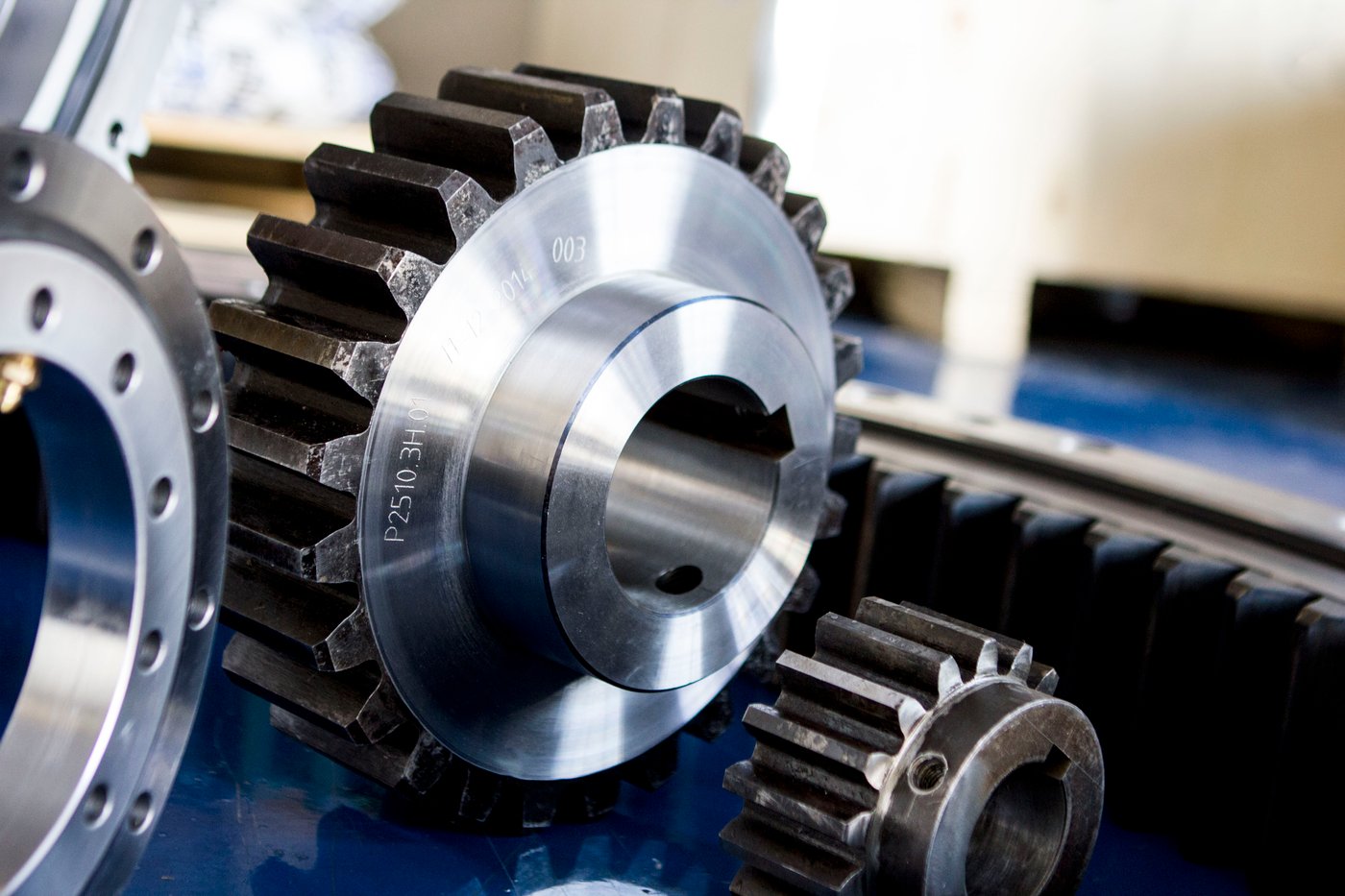
In face mount configuration, the slewing drive housing includes a machined flat mounting face—typically on the rear or base of the housing—with a bolt hole pattern for attachment to equipment structure. The drive's internal worm or planetary gear meshes with a large slewing ring gear (internal or external teeth) that forms the output connection.
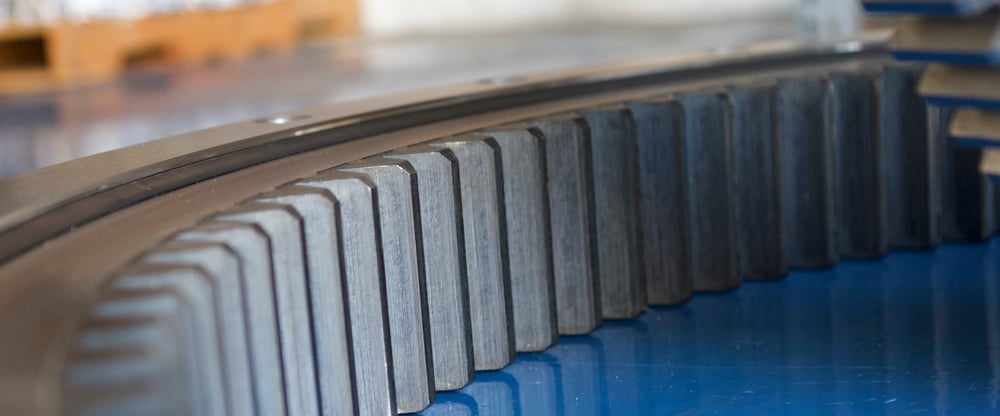
This slewing ring gear includes its own bolt hole pattern for mounting to the rotating equipment structure. As the drive's input shaft rotates (powered by a motor), the gear reduction mechanism drives the large slewing ring, causing it to rotate relative to the stationary housing. Equipment mounted to the slewing ring rotates with it while the housing remains stationary against the mounting structure.
The key characteristic of face mount configuration is that the stationary mounting and rotating output both occur in the same plane—creating a very compact axial profile. The entire assembly can be quite thin relative to the diameter of rotation.
Advantages of Face Mount Configuration
Compact Axial Envelope: Face mount drives offer the minimum axial (height) dimension for a given load capacity. The flat profile makes them ideal for applications with height constraints where thickness must be minimized. Equipment designs requiring low profile assemblies strongly favor face mount configurations.
Large Bearing Diameter: For a given drive size, face mount configuration typically provides the largest bearing diameter, which translates to superior moment load capacity. The large bearing diameter creates a long moment arm that efficiently resists overturning moments. Applications with significant moment loads relative to axial loads benefit substantially from this geometric advantage.
Simple Structural Integration: The flat mounting face and large-diameter slewing ring integrate naturally with many equipment structures. Rotating platforms, turrets, or superstructures can mount directly to the slewing ring without complex adapter structures. This direct mounting simplifies equipment design and reduces part count.
Efficient Load Distribution: The large-diameter mounting bolt circle distributes loads over a broad area, reducing localized stress concentrations. This efficient load distribution enhances structural durability and allows lighter support structures compared to more concentrated loading configurations.
Limitations of Face Mount Configuration
Radial Space Requirements: While face mount drives minimize axial dimension, they require substantial radial (diameter) space. The large slewing ring and its mounting bolt pattern create a considerable footprint. Applications with diameter constraints may find face mount configurations impractical.
Mounting Surface Flatness Requirements: Face mount drives require flat, rigid mounting surfaces to ensure proper load distribution across the bearing. Surface flatness tolerances typically specify maximum deviation across the mounting diameter—often 0.010" to 0.030" depending on drive size. Achieving these flatness requirements in welded structures or large fabrications can require careful manufacturing procedures or machining operations.
Access for Installation and Service: The large-diameter mounting bolt pattern means numerous bolts distributed around the perimeter. Installing and torquing these bolts—particularly in confined spaces—can be time-consuming and may require special tools or access provisions. Similarly, servicing or replacing face mount drives requires access around the entire perimeter.
Gear Exposure Considerations: In external gear face mount designs, the slewing ring gear is exposed on the drive perimeter. This requires either protective housing (adding cost and complexity) or acceptance of gear exposure to the operating environment. Internal gear designs address this concern but typically cost more and limit the largest available sizes.
Typical Face Mount Applications
Face mount configuration excels in applications characterized by significant moment loads relative to axial loads, height-constrained installations requiring compact profiles, rotating platforms or turrets with natural integration, and applications where radial space is available but axial space is limited.
Common face mount applications include solar tracking systems (single and dual-axis trackers), aerial work platforms and scissor lifts, rotating radar or communications platforms, small to medium construction equipment (mini-excavators, compact cranes), and automated assembly systems with rotating work platforms.
SlewPro's face mount slewing drives provide the compact profile and high moment capacity these applications demand.
Flange Mount Configuration: The Versatile Middle Ground
Flange mount configuration represents a middle ground between face mount and shaft mount approaches, offering balanced characteristics suitable for diverse applications.
Flange Mount Mechanical Description
Flange mount slewing drives feature a housing with an integral flange—a protruding rim with a bolt hole pattern—that attaches to equipment structure. This flange typically extends radially from the housing body, creating a mounting interface perpendicular to the drive axis.
The drive output can take several forms in flange mount configuration. Some designs incorporate a rotating ring similar to face mount drives but with a smaller diameter than the mounting flange. Other designs use a shaft output extending from the housing. The key distinguishing feature is the flanged housing attachment rather than the output configuration.
Flange mount drives typically have a more pronounced axial dimension than face mount equivalents but require less radial space. They bridge the gap between ultra-compact face mount drives and the more cylindrical shaft mount configurations.
Advantages of Flange Mount Configuration
Balanced Dimensions: Flange mount drives offer reasonable compromise between axial and radial dimensions. They're more compact radially than face mount drives while not extending as far axially as shaft mount equivalents. This balanced proportion suits applications with moderate constraints in both dimensions.
Flexible Output Options: Flange mount housings can accommodate various output configurations—rotating rings, output shafts, or even dual outputs. This flexibility allows the same basic drive housing to serve diverse applications with different output requirements.
Robust Mounting Interface: The flange provides a substantial, rigid mounting interface with good load distribution characteristics. The flange structure typically offers excellent resistance to deformation under loading, maintaining proper alignment between drive and equipment structure.
Adaptability to Various Structures: Flange mounting adapts readily to diverse equipment structures—frames, housings, mounting plates, or custom brackets. The raised flange can bridge gaps or accommodate structural variations that might complicate face mounting.
Reasonable Access Requirements: While flange bolt patterns still require perimeter access, the typically smaller diameter compared to face mount drives makes installation and service somewhat more manageable in constrained spaces.
Limitations of Flange Mount Configuration
Not Optimal for Extreme Requirements: Flange mount configuration doesn't excel at the extremes—it's not as compact as face mount for height-constrained applications, nor as adaptable as shaft mount for varied mounting orientations. Applications with extreme requirements in specific dimensions may be better served by specialized configurations.
Intermediate Complexity: Flange mount drives occupy a middle ground in complexity and cost between simpler shaft mount drives and more complex face mount configurations. For applications where simplicity is paramount, shaft mount may be preferable; for maximum compactness, face mount is superior.
Load Capacity Trade-offs: The bearing diameter in flange mount drives typically falls between face mount and shaft mount equivalents. This means moment capacity may be lower than face mount designs while overall size may be larger than shaft mount options.
Typical Flange Mount Applications
Flange mount configuration works well for applications requiring balanced size proportions, flexible mounting orientation options, moderate loads without extreme moment loading, and adaptability to various equipment structures.
Common applications include medium-duty material handling equipment, industrial positioning systems, automated machinery with varied mounting requirements, and equipment where the drive mounts to a vertical or angled surface rather than horizontal platform.
Shaft Mount Configuration: Maximum Flexibility
Shaft mount configuration—sometimes called center pivot or through-bore mounting—represents the most mechanically flexible mounting approach, with the drive housing mounting to equipment structure while an output shaft or through-bore provides the rotating connection.
Shaft Mount Mechanical Description
Shaft mount slewing drives feature housings that attach to equipment structures through various mounting provisions—mounting feet, brackets, or custom mounting configurations. The critical distinction is that the rotating output consists of a shaft (solid or hollow/through-bore) extending from the housing along the rotation axis.
In solid shaft designs, the output shaft extends from the drive housing and connects to driven equipment through couplings, flanges, or direct mounting. In through-bore or hollow shaft designs, the drive includes a central opening allowing passage of cables, hydraulic lines, or a structural member while still providing torque transmission through the shaft.
The housing mounting and shaft output are mechanically independent, allowing considerable flexibility in how the drive integrates with equipment structures and driven elements.
Advantages of Shaft Mount Configuration
Maximum Mounting Flexibility: Shaft mount drives can mount in virtually any orientation—vertical, horizontal, or angled. The housing can attach to equipment structures using diverse mounting provisions customized for specific applications. This flexibility simplifies integration into varied equipment architectures.
Through-Bore Capability: Hollow shaft designs enable utilities (electrical cables, hydraulic lines, pneumatic tubing) or structural members to pass through the drive axis. This capability is essential for many applications where the rotation axis must remain unobstructed or where continuous rotation without cable management issues is required.
Compact Radial Footprint: Shaft mount drives typically require minimal radial space around the rotation axis. The output shaft creates a smaller diameter rotating connection than the large slewing rings in face mount configurations. This compact radial footprint suits applications with diameter constraints.
Simplified Installation: Many shaft mount drives use relatively simple mounting arrangements—a few mounting bolts rather than large-diameter bolt circles. This simplifies installation procedures and reduces installation time.
Torque Arm Accommodation: The separate housing mounting enables straightforward torque arm implementation when needed. Applications requiring reaction torque management benefit from this mechanical independence between housing mounting and output connection.
Limitations of Shaft Mount Configuration
Lower Moment Capacity: The smaller effective bearing diameter in shaft mount drives compared to face mount equivalents results in reduced moment load capacity. The shaft output creates a relatively small moment arm, making these drives less suitable for applications with significant overturning moments.
Increased Axial Length: Shaft mount drives typically exhibit greater axial (length) dimension than face mount equivalents of similar capacity. The shaft extension and mechanical layout create a more elongated assembly. Height-constrained applications may find this problematic.
Output Connection Complexity: Connecting driven equipment to shaft outputs may require couplings, flanges, keys, splines, or other mechanical connections that add complexity and potential points of failure. Face mount drives' direct platform mounting is often simpler mechanically.
Radial Load Considerations: Some shaft mount configurations impose radial loads on the output shaft (from belt drives, chain drives, or offset loads). These radial loads must be carefully managed to avoid bearing overload. Face mount drives distribute radial loads more naturally through their large-diameter bearing arrangements.
Alignment Requirements: Shaft-based connections typically require more precise alignment than face mount arrangements. Misalignment between shaft and driven equipment can create binding, excessive bearing loads, or coupling failures.
Typical Shaft Mount Applications
Shaft mount configuration excels for applications requiring through-bore capability for utilities or structure, mounting flexibility in various orientations, compact radial dimensions with available axial space, and primarily axial loading without extreme moment loads.
Common applications include rotating platforms requiring through-bore for cables, antenna and satellite dish positioning systems, automated packaging and palletizing equipment, industrial mixers and agitators, and rotating displays or observation platforms.
Critical Design Considerations for All Mounting Types
Regardless of mounting configuration, several critical design factors affect system performance and reliability.
Mounting Surface Preparation and Flatness
All mounting configurations require proper surface preparation for optimal load distribution and component life. Mounting surfaces must be flat within specified tolerances (typically 0.002-0.005" per foot for precision applications), properly finished to prevent fretting corrosion, and structurally rigid to resist deflection under loading.
In welded structures, residual stress and welding distortion can compromise flatness. Machining mounting surfaces after welding or stress-relieving fabrications may be necessary. Large mounting surfaces may require CNC machining to achieve required flatness across the full mounting area.
Fastener Selection and Installation
Proper fastener selection and installation are critical for reliable mounting. Fasteners must provide adequate strength for applied loads with appropriate safety factors, resist loosening from vibration and cyclic loading, and avoid corrosion in the operating environment.
Bolt preload—the tension created by tightening fasteners—is crucial for proper mounting function. Adequate preload ensures joint rigidity, prevents fretting between mating surfaces, distributes loads properly across the joint, and maintains connection integrity under dynamic loading.
Installation procedures should specify torque values or bolt elongation, tightening sequence (typically star pattern from center outward), and re-torque requirements after initial operation. Thread locking compounds or mechanical locking features prevent loosening in vibration environments.
Load Path Analysis and Structural Design
The mounting interface represents a critical load path where forces transfer from equipment structure through the slewing drive. Proper structural design ensures this load transfer occurs efficiently without creating stress concentrations or excessive deflections.
Finite element analysis of mounting regions helps identify stress concentrations, validate structural adequacy, optimize material distribution, and ensure proper load transfer through the joint. The supporting structure must provide sufficient stiffness to prevent excessive deflection that could overload the slewing drive bearing or cause binding.
In large installations, thermal expansion must be considered. Different materials expanding at different rates can alter bolt preload or create stress in mounting structures. Thermal analysis may be necessary for equipment operating over wide temperature ranges.
Sealing and Contamination Protection
The mounting interface represents a potential ingress path for contamination. Proper sealing protects internal drive components from dust, water, and chemicals that could cause premature wear or failure.
Face mount configurations may require seals between the stationary housing and rotating slewing ring. Flange mount assemblies need seals around the mounting flange perimeter. Shaft mount drives require shaft seals at the output connection.
SlewPro's sealed slewing drive designs incorporate multiple sealing stages to protect against contamination in harsh environments. Additional sealing or protective covers at mounting interfaces may be necessary depending on application exposure.
Alignment and Runout Control
Proper alignment between drive components and driven equipment affects performance, noise, vibration, and component life. Mounting configuration influences alignment requirements and procedures.
Face mount drives require coaxial alignment between the mounting surface and rotation axis. Runout in the mounting surface or slewing ring can create cyclic bearing loads or positioning errors. Specified runout tolerances typically range from 0.005-0.020" depending on drive size and application precision requirements.
Shaft mount drives require alignment between the output shaft and driven equipment. Angular misalignment, parallel offset, or both create coupling loads or binding that can damage bearings or reduce efficiency. Alignment procedures using dial indicators, laser alignment tools, or precision fixtures ensure proper installation.
Thermal Considerations
Temperature affects mounting performance through thermal expansion, material property changes, and lubricant behavior. Different mounting configurations exhibit different thermal sensitivities.
Face mount drives with large-diameter mounting circles experience greater absolute expansion for a given temperature change than compact shaft mount equivalents. The differential expansion between drive components and equipment structure can affect bolt preload or create stress in mounting connections.
In high-temperature applications, material selections must account for elevated temperature properties. Fastener grades, sealing materials, and structural elements should all maintain adequate performance at maximum operating temperatures. Thermal isolation or active cooling may be necessary when drives mount near high-temperature equipment like electric motors.
Maintenance Accessibility
Mounting configuration significantly affects maintenance accessibility throughout equipment life. Face mount drives require perimeter access for bolt removal when drive replacement is necessary. The large bolt circle means considerable work surface area around the drive must be accessible.
Flange mount drives offer somewhat better accessibility due to smaller mounting diameter, though still requiring perimeter access. Shaft mount drives often enable drive removal through relatively simple procedures—disconnecting shaft couplings or through-bore connections and removing housing mounting bolts.
Equipment designs should consider maintenance requirements during initial design. Access panels, removable covers, or modular construction that allows component access without extensive disassembly improve maintainability throughout equipment life.
Hybrid and Custom Mounting Solutions
While face mount, flange mount, and shaft mount represent standard configurations, custom applications sometimes require hybrid approaches or specialized mounting solutions.
Custom Mounting Provisions
Custom slewing drives can incorporate specialized mounting features designed for specific applications. Non-standard bolt patterns matching existing equipment interfaces, integrated mounting brackets or feet eliminating separate adapter structures, and hybrid designs combining elements of multiple mounting types all enable optimization for unique applications.
Custom mounting provisions may add cost compared to standard configurations but can deliver significant value by simplifying equipment design, reducing part count and assembly complexity, improving performance through optimized load paths, or enabling applications impossible with standard mounting options.
Adapter Plates and Mounting Interfaces
When standard drive mounting configurations don't ideally match equipment structures, adapter plates or mounting interfaces can bridge the gap. These adapters allow using standard drive configurations while accommodating non-standard equipment interfaces.
Adapter plate design requires careful attention to load transfer, structural rigidity, and proper bolt loading. Improperly designed adapters can introduce stress concentrations, create excessive deflections, or compromise system performance despite using quality slewing drives.
SlewPro's engineering team can assist with adapter plate design or develop integrated solutions that eliminate adapters through custom mounting provisions.
Modular Mounting Systems
Some applications benefit from modular mounting approaches where drives can be reconfigured or replaced without extensive equipment disassembly. Modular mounting systems might incorporate quick-disconnect fasteners for rapid drive replacement, standardized interfaces allowing drive substitution or upgrades, or integrated features simplifying alignment and installation procedures.
Modular approaches typically add initial cost but can reduce lifecycle costs through improved maintainability and flexibility for equipment upgrades or configuration changes.
Application Case Studies: Mounting Selection in Practice
Examining specific application scenarios illustrates how mounting configuration selection affects real-world equipment designs.
Solar Tracking System: Face Mount Optimization
A solar tracking system design required rotating heavy solar panel arrays through 120 degrees of daily motion. The application created significant moment loads from panel weight at long moment arms, particularly under wind loading. Height constraints limited the vertical dimension available for the drive assembly.
Face mount configuration provided the optimal solution. The large-diameter slewing ring delivered excellent moment capacity for the panel loads. The compact axial profile fit within the height constraint. The wide mounting bolt pattern distributed loads effectively across the tracker frame structure. The rotating slewing ring naturally integrated with the panel mounting structure without requiring complex adapters.
Alternative configurations would have compromised performance. A shaft mount drive with equivalent moment capacity would have required substantially larger overall size and violated height constraints. The larger bearing diameter of face mount configuration delivered superior moment capacity in the most compact profile.
Automated Packaging System: Shaft Mount Through-Bore
An automated packaging line required a rotating turret that indexed product positions for filling, capping, and labeling operations. Multiple utilities—compressed air, electrical power, and control signals—needed to reach rotating stations. Continuous rotation without cable management complications was essential for reliable operation.
Shaft mount through-bore configuration provided the ideal solution. The through-bore allowed utilities to pass through the rotation axis, eliminating cable management issues. The compact radial footprint fit within the confined packaging line space. The flexible mounting orientation allowed the drive to mount vertically on the machine frame.
Face mount configuration would have been problematic for utility routing. While face mount drives can accommodate through-bore features, they require substantially larger overall dimensions to achieve equivalent capacity. The shaft mount drive's compact radial footprint and through-bore capability made it the clear choice.
Mobile Crane: Face Mount for Superstructure Rotation
A mobile crane design required a slewing system for the superstructure that carried the boom, operator cab, and counterweights. The application created extreme moment loads from the extended boom, particularly during lifting operations. The slewing system had to fit within the available height between the undercarriage and superstructure while providing exceptional moment capacity.
Face mount configuration with a large-diameter triple-roller slewing ring delivered the necessary moment capacity in a manageable axial dimension. The large bearing diameter provided the long moment arm needed to resist boom-induced overturning moments efficiently. The robust mounting interface distributed massive loads across the superstructure frame.
SlewPro's heavy-duty face mount slewing drives are specifically engineered for these demanding mobile crane applications where moment capacity and compact profile are both critical.
Satellite Antenna System: Shaft Mount for Multi-Axis Positioning
A satellite tracking antenna required precise positioning in azimuth (rotation) and elevation (tilt) axes. The antenna had to track satellites across the sky while maintaining signal lock. Accurate positioning and smooth motion were critical for maintaining communication quality.
Shaft mount configuration excelled for both rotation axes. The azimuth axis used a vertical shaft mount drive supporting the antenna pedestal. The elevation axis employed a horizontal shaft mount drive tilting the antenna reflector. The compact radial footprint of shaft mounting minimized the antenna profile and wind loading.
The shaft outputs integrated naturally with the antenna positioning mechanisms through precision couplings. The flexible mounting orientations accommodated both vertical and horizontal axes without requiring specialized drive configurations for each axis.
Selection Decision Framework
Choosing the optimal mounting configuration requires systematic evaluation of application requirements against mounting type characteristics.
Start with Load Analysis
Begin by characterizing application loads: axial loads (parallel to rotation axis), radial loads (perpendicular to rotation axis), moment loads (overturning moments), combined loading conditions, and dynamic or shock loading considerations.
Applications with high moment loads relative to axial loads favor face mount configuration due to large bearing diameter. Applications with primarily axial loading and modest moment loads can use shaft mount configuration effectively. Moderate combined loading suits flange mount approaches.
Evaluate Space Constraints
Assess available envelope dimensions: axial (height) limitations constraining vertical dimension, radial (diameter) limitations restricting horizontal footprint, overall volume available for the complete assembly, and clearances around the drive for installation and maintenance access.
Tight height constraints favor face mount configuration. Diameter limitations favor shaft mount designs. Moderate constraints in both dimensions suit flange mount options.
Consider Integration Requirements
Analyze how the drive integrates with equipment structure: mounting surface characteristics (flat platform, vertical face, structural frame), rotating element configuration (platform, shaft, turret), utility routing requirements (cables, hoses, structural members through rotation axis), and drive orientation preferences (horizontal, vertical, angled).
Through-bore requirements mandate shaft mount configuration. Large rotating platforms integrate naturally with face mount drives. Flexible mounting location needs favor shaft mount designs.
Assess Performance Requirements
Evaluate precision and control needs: positioning accuracy and repeatability, motion smoothness and vibration sensitivity, speed range and acceleration capabilities, and efficiency requirements (particularly for battery-powered equipment).
High-precision applications may favor the larger bearing diameter and rigidity of face mount drives. Applications requiring maximum efficiency benefit from optimized mounting configurations that minimize parasitic losses.
Factor in Lifecycle Considerations
Consider installation, maintenance, and operational requirements: installation complexity and required tooling, maintenance accessibility throughout equipment life, expected service life and replacement scenarios, operating environment and contamination exposure, and total cost of ownership including installation and maintenance.
Applications requiring frequent drive replacement favor simpler mounting configurations. Harsh environments may require specific sealing or protection approaches tied to mounting configuration. Lifecycle cost analysis should include installation labor, maintenance requirements, and replacement procedures.
Consult with Experienced Manufacturers
Leverage manufacturer expertise during selection. SlewPro's engineering team helps customers evaluate mounting options considering application loads, space constraints, integration requirements, manufacturing capabilities, and lifecycle cost optimization.
Experienced manufacturers can identify potential issues, suggest alternatives you might not have considered, validate selections through analysis and testing, and provide documentation supporting design decisions.
Conclusion
Slewing drive mounting configuration—face mount, flange mount, or shaft mount—fundamentally affects system performance, installation complexity, maintenance requirements, and lifecycle costs. No single mounting configuration is universally optimal; each approach offers distinct advantages that make it ideal for specific application scenarios while presenting limitations in others.
Face mount configuration delivers maximum moment capacity and minimum axial dimension, making it ideal for height-constrained applications with significant overturning moments. Flange mount configuration provides balanced characteristics suitable for diverse applications without extreme requirements in any dimension. Shaft mount configuration offers maximum mounting flexibility and through-bore capability, excelling in applications requiring compact radial footprint or utility routing through the rotation axis.
Proper selection requires systematic evaluation of application requirements including load analysis, space constraints, integration needs, performance specifications, and lifecycle considerations. The mounting interface represents a critical load path requiring careful attention to surface preparation, fastener selection, load distribution, sealing, and alignment.
SlewPro's comprehensive product range includes drives in all mounting configurations, from compact face mount designs for solar trackers to robust shaft mount through-bore drives for automated machinery. Our engineering support helps customers select optimal mounting configurations and develop custom solutions when standard options don't ideally match application requirements.
The investment in proper mounting configuration selection and implementation pays dividends throughout equipment life through reliable performance, simplified installation and maintenance, and optimized total cost of ownership. Equipment manufacturers and designers who give mounting configuration the attention it deserves develop more successful products that perform reliably, install efficiently, and maintain cost-effectively.
Ready to determine the optimal mounting configuration for your slewing drive application? Contact SlewPro today to discuss your specific requirements and discover how our engineering expertise can help you select and implement the mounting solution that best serves your application needs.