
We get the call often. An OEM engineer has a new platform in development or a machine that needs a bearing replacement. They've calculated the loads, measured the envelope, and identified a standard single-row ball slewing bearing that mostly works. The diameter is right. The bolt circle lines up. The load rating clears their numbers, or comes close enough that a small safety factor adjustment makes the math work on paper.
Then they call us and ask for the closest SlewPro equivalent. Ship it fast, price it sharp, move on.
This is the point where we become, briefly, the least popular bearing supplier on the short list. Because instead of pulling a part number and generating a quote, we ask questions — about duty cycle, shock environment, the stiffness requirement behind the load rating, what the bearing is actually doing in the machine and what happens to their customer when it stops doing it well enough.
Some engineers appreciate this immediately. Others find it frustrating. But the ones who stay in the conversation almost always arrive at the same conclusion: the bearing they thought was right is not quite the bearing their application needs, and the difference between "almost right" and "actually right" has a cost that dwarfs the price of the bearing itself.
Where the Gaps Hide
A slewing bearing catalog provides three primary ratings: basic dynamic load rating, basic static load rating, and — for geared rings — a torque rating. These numbers are accurate for what they describe. The problem is that they do not describe everything that matters.
Stiffness is the most common hidden gap. Two bearings with identical load ratings can have substantially different stiffness based on ball size, raceway geometry, contact angle, and preload. A bearing selected by load rating that delivers 30% lower stiffness than the application requires produces positioning errors or vibration that no amount of load capacity can fix.
Preload is the second. Standard catalog bearings are manufactured to a preload range — light, medium, or heavy — that spans a band wide enough for many applications. A specific application may need one end of that range; the delivered bearing may be at the other. The resulting mismatch in breakaway torque or stiffness manifests during commissioning or worse, in the field.
Raceway geometry differs between manufacturers in ways that affect contact stress, wear patterns, and fatigue life — differences invisible in catalog load ratings. Gear integration — tooth module, hardness, quality level — varies similarly. In noise-sensitive applications, the gear quality can be the difference between a smooth machine and one that produces objectionable vibration.
The costs are radically asymmetric. An additional hour on specification or an additional $1,500 on the right bearing is small and predictable. A premature failure costing $45,000 in replacement, downtime, and warranty labor wipes out the savings from thirty bearing purchases at the lower price.
What We're Listening For
When a SlewPro application engineer pushes back, we're listening for specific indicators.
Incomplete load cases. The most common omission is the moment-derived equivalent load — the 4M/D conversion that, as detailed in our single-row ball bearing guide, typically dominates the equivalent load by an order of magnitude over direct axial weight. An engineer who selected based on axial capacity alone may have a bearing rated for 10% of actual equivalent load.
Duty cycle mismatches. A bearing that clears load ratings with margin may still reach its fatigue limit within the machine's service life if the cycle count is high — or a load spectrum correction may reveal that a smaller, less expensive bearing achieves the same life target.
Environmental gaps. Standard sealing adequate for indoor service fails in outdoor construction environments. Standard lubrication intervals for clean conditions lead to premature failure in contaminated environments. These mismatches are common when a bearing designed for one application category is specified for another.
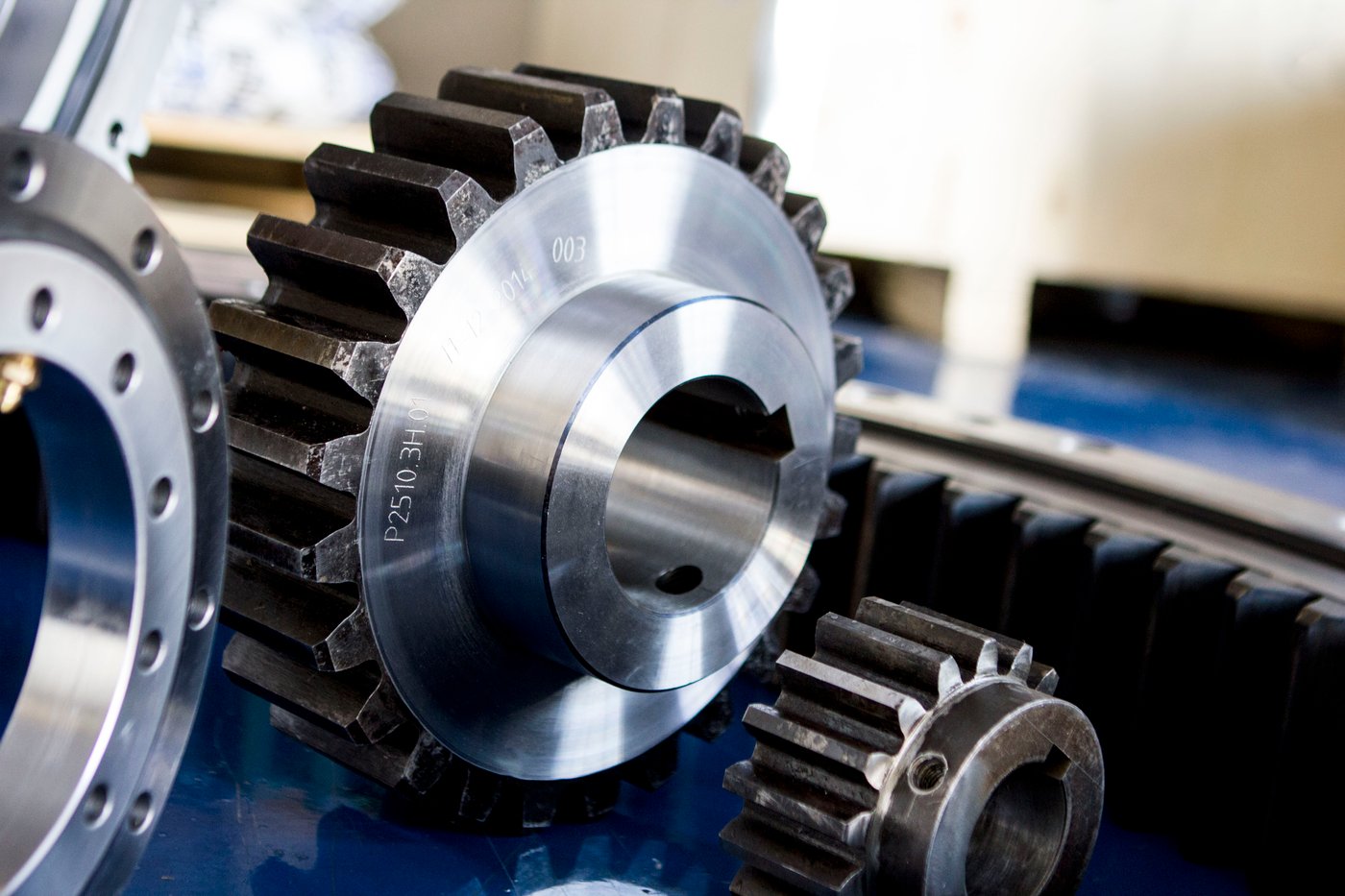
Mounting concerns. A bearing may match bolt circle and pilot diameter but fail if mounting surface flatness exceeds tolerance or structural stiffness is inadequate. We also listen for gear integration issues — module, tooth count, pressure angle, and quality must match the drive system, not just the mounting interface. SlewPro's Rhino Gear manufacturing enables us to specify gear parameters independently from bearing parameters, matching both to the application.
How the Conversation Changes the Outcome
The specification conversation consistently changes the outcome in one of three directions.
The right bearing is a different size — larger because the complete load case produces higher equivalent load than assumed, or smaller because load spectrum analysis reveals a smaller bearing achieves the required life at lower cost.
The right bearing is the same size with a different specification — adjusted contact angle for higher radial load fraction, increased preload for stiffness, upgraded gear quality for noise, or enhanced sealing for contamination. These adjustments do not change the catalog load rating but fundamentally change behavior in the specific application.
The right answer is not a single-row ball bearing at all — the moment-to-diameter ratio exceeds single-row limits (indicating double-row), the radial fraction exceeds stability thresholds (indicating cross roller), or shock exceeds practical ball contact limits (indicating the 100 Series roller bearing).
SlewPro's complete slewing ring range — from the 21 Series through the 100 Series, plus thin section bearings — means the conversation follows the application to the right answer, wherever it leads.
Conclusion
We understand that asking questions when a customer wants a quick part number is not the fastest way to close a sale. We do it anyway — because the alternative is selling a bearing that almost fits, and the costs of "almost" land on the OEM and their customer, not on us.
The purpose-built specification philosophy is not about selling more expensive bearings. It is about selling the right bearing — which sometimes costs more, sometimes costs less, and always costs less than the consequences of getting it wrong.
Contact SlewPro or request a quote to start the specification conversation. Bring your load case, your mounting envelope, your duty cycle, and your questions — and expect us to bring ours. Application engineering support including 3D modeling, FEA, and downloadable CAD files is available to verify the specification before the bearing ships. That is the bearing we will sell you. It is the only one we are interested in selling.